Cell Phone Forensics: What Businesses and Legal Teams Need to Know
 April 6, 2026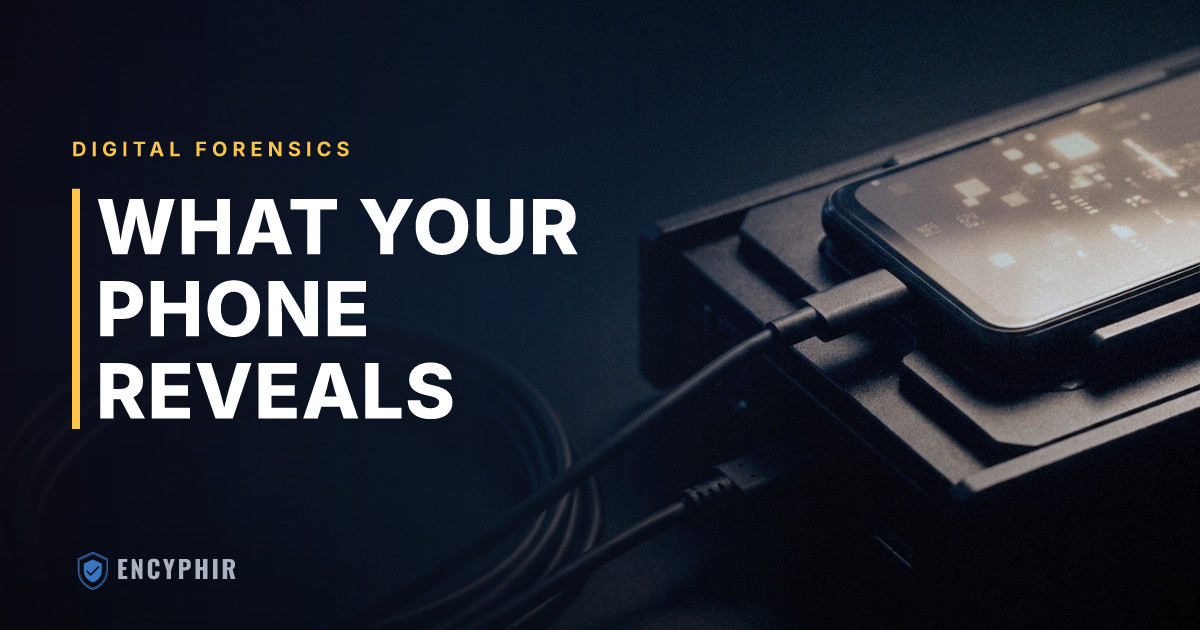
A single cell phone can hold more useful intelligence than an entire filing cabinet of documents. Text messages, call logs, GPS data, app activity, deleted photos, browsing history: the evidence stored on a mobile device can make or break a legal case, an internal investigation, or a corporate dispute.
Cell phone forensics is one of the fastest-growing disciplines in the investigative field, and for good reason. Attorneys use it to build litigation strategy. Corporations use it to investigate employee misconduct. Individuals use it to navigate high-stakes personal matters. The data locked inside a smartphone can be the key to uncovering the truth.
At Encyphir Risk Management, our licensed investigators and forensic analysts use industry-leading tools and court-accepted methods. We extract, preserve, and analyze mobile device data so every piece of evidence holds up when it matters most.
What Is Cell Phone Forensics?
Cell phone forensics, also known as mobile device forensics, is the process of recovering, extracting, and analyzing data from smartphones, tablets, and other mobile devices. It uses specialized tools and techniques. Unlike simply scrolling through someone's phone, forensic analysis captures data at a deeper level, including information the user may have tried to delete.
A properly conducted forensic examination can recover:
- Text messages and iMessages (including deleted conversations)
- Call logs and voicemail records
- Emails and email attachments
- Photos, videos, and metadata (including geolocation tags)
- App data from platforms like WhatsApp, Signal, Telegram, Slack, and social media
- GPS and location history
- Internet browsing history and search queries
- Cloud-synced data and backup files
- File transfer and download records
This recovered data is then documented in a forensically sound report that maintains chain-of-custody integrity. That is a critical requirement if the evidence will be introduced in court or regulatory proceedings.
When Is Cell Phone Forensics Used?
Mobile device forensics applies across a wide range of investigative scenarios. Common situations where our clients engage Encyphir's digital forensics services include:
Corporate Investigations: An employee may be suspected of stealing trade secrets, communicating with competitors, or engaging in fraud. Their company-issued or personal device may contain critical evidence. Text messages, file transfers, and app usage can reveal patterns of misconduct that would otherwise go undetected.
Litigation Support: Attorneys frequently need forensic evidence extracted from mobile devices during civil litigation, family law cases, employment disputes, and criminal defense matters. Properly preserved cell phone data can corroborate timelines, establish intent, and contradict false testimony. Our team works closely with law firms to provide expert analysis and testimony when needed.
Employee Misconduct and Executive Investigations: In cases involving executive misconduct, intellectual property theft, or policy violations, mobile forensics can uncover communications and data transfers that reveal the full scope of wrongdoing. This holds true even when the subject has tried to cover their tracks.
Personal Investigations: From custody disputes to suspected infidelity, individuals also turn to mobile forensics to get verifiable evidence that can be presented in legal proceedings.
Why You Can't Just Do It Yourself
Many businesses and individuals make the mistake of trying to review or capture cell phone evidence on their own. Screenshots, forwarded messages, and photos of a screen are easily challenged in court as incomplete, manipulated, or taken out of context.
Professional forensic analysis is different in several critical ways:
- Chain of custody is documented from the moment the device is received, ensuring admissibility.
- Forensic imaging creates a bit-for-bit copy of the device's storage, preserving all data, including hidden and deleted content, without altering the original.
- Validated tools such as Cellebrite, Magnet AXIOM, and GrayKey are used to extract data in a manner recognized by courts and regulatory bodies.
- Expert reporting translates raw data into clear, organized findings that attorneys, judges, and juries can understand.
Trying to access or copy data without proper methodology can destroy evidence, compromise its admissibility, or even expose you to legal liability.
What to Do If You Need Cell Phone Evidence
If you believe a mobile device contains evidence relevant to your case, time matters. Data can be remotely wiped, overwritten by system updates, or lost through routine device use. Here are the steps we recommend:
- Do not try to access or search the device yourself. This risks altering metadata and compromising the evidence.
- Secure the device if possible. Place it in airplane mode or a Faraday bag to prevent remote access or wiping.
- Contact a licensed forensic examiner immediately. The sooner a professional begins the preservation process, the more data can be recovered.
- Document the context. Note when the device was obtained, who had access to it, and why the examination is being requested. This information supports the chain of custody.
Understanding the Forensic Examination Process
Many clients come to us unsure of what happens once a device is placed in our care. Demystifying the process helps attorneys, HR leaders, and individuals feel more confident about engaging a forensic examiner. It also helps them set realistic expectations for timelines and deliverables.
The process typically begins with intake and scoping. Our examiners work with the client and, when appropriate, their legal counsel to define the questions that need answering. Is the goal to recover deleted messages from a specific date range? Determine whether a particular file was transferred off the device? Establish the physical location of the phone at a given moment? A well-defined scope lets us focus our efforts and produce findings that directly respond to the matter at hand.
Next comes acquisition. Depending on the make, model, operating system, and security posture of the device, examiners may perform a logical extraction, a file system extraction, or a full physical extraction. Newer iPhones and high-end Android devices often require advanced techniques, including checkm8 exploits, specialized hardware, or cloud-based acquisition of iCloud or Google backups. Throughout this stage, every action is logged, hashed, and verified so the resulting forensic image can be independently validated later.
Analysis is where the raw data becomes intelligence. Examiners reconstruct conversation threads, correlate timestamps across applications, geolocate photos, parse third-party app databases, and flag artifacts that suggest deletion, wiping, or anti-forensic behavior. For corporate clients, this is often the stage where patterns of data exfiltration or unauthorized communication with competitors come clearly into view.
Finally, we produce a written report, along with exhibits, exports, and, when required, sworn declarations or deposition testimony. Our reports are written to be understood by non-technical decision-makers while still standing up to scrutiny from opposing experts.
Legal and Privacy Considerations You Cannot Ignore
Cell phone forensics sits at the intersection of investigative necessity and strict legal boundaries. Before any device is examined, there must be lawful authority to do so. For company-issued devices, this often comes from clearly written acceptable use policies and employment agreements that establish no expectation of privacy. For personally owned devices, consent, subpoena, or court order is generally required.
State wiretap statutes, the federal Stored Communications Act, and evolving case law around digital privacy all shape what can and cannot be examined. A forensic examiner who ignores these limits can produce evidence that is later excluded. Worse, they can expose the requesting party to civil or criminal liability. Encyphir's investigators regularly coordinate with counsel to confirm authority before any acquisition begins, and we document that authority as part of the case file.
Privileged communications, attorney work product, and third-party personal data create additional challenges. Sophisticated forensic workflows include filtering protocols, taint team reviews, and scoped keyword searches so only relevant, non-privileged material is surfaced to the legal team. This matters most in matters involving due diligence, regulatory investigations, or disputes where multiple parties share access to the same device.
Industry Scenarios Where Mobile Forensics Changes Outcomes
Consider a departing sales executive who downloads the company's customer list to a personal iPhone in the weeks before resignation. A proper forensic examination can reveal the file transfers themselves. It can also reveal the AirDrop sessions, cloud uploads, and messaging threads with a competitor that preceded them. Without forensics, the employer may have only suspicion. With forensics, they have a timeline suitable for injunctive relief.
Consider a family law matter where one spouse claims to have been home on a specific evening. Location history, app activity, vehicle connection logs, and photo metadata can either confirm or contradict that claim with a precision that testimony alone cannot match. In personal matters such as infidelity investigations, this kind of verifiable data is often what moves a case from accusation to resolution.
Consider a school district facing allegations of misconduct by a staff member. Mobile data can document inappropriate communications, establish patterns, or, just as importantly, clear an innocent employee who has been falsely accused. Across each of these scenarios, the common thread is defensibility: the evidence holds up because it was collected, preserved, and interpreted the right way.
Partner with a Licensed Forensic Investigation Firm
Cell phone forensics is not a commodity service. It requires licensed investigators, validated tools, defensible processes, and the expertise to interpret findings in context. At Encyphir Risk Management, we bring all of these capabilities together under one roof. We serve corporate clients, law firms, and individuals across a wide range of investigative matters.
Whether you're responding to an internal threat, building a legal case, or simply need to know what a device contains, our team is ready to help.
Contact Encyphir Risk Management today to discuss your cell phone forensics needs. Our team will guide you through the process, protect the integrity of your evidence, and deliver the answers you need.