Court Reporting Services: What Attorneys Need to Know
 February 7, 2023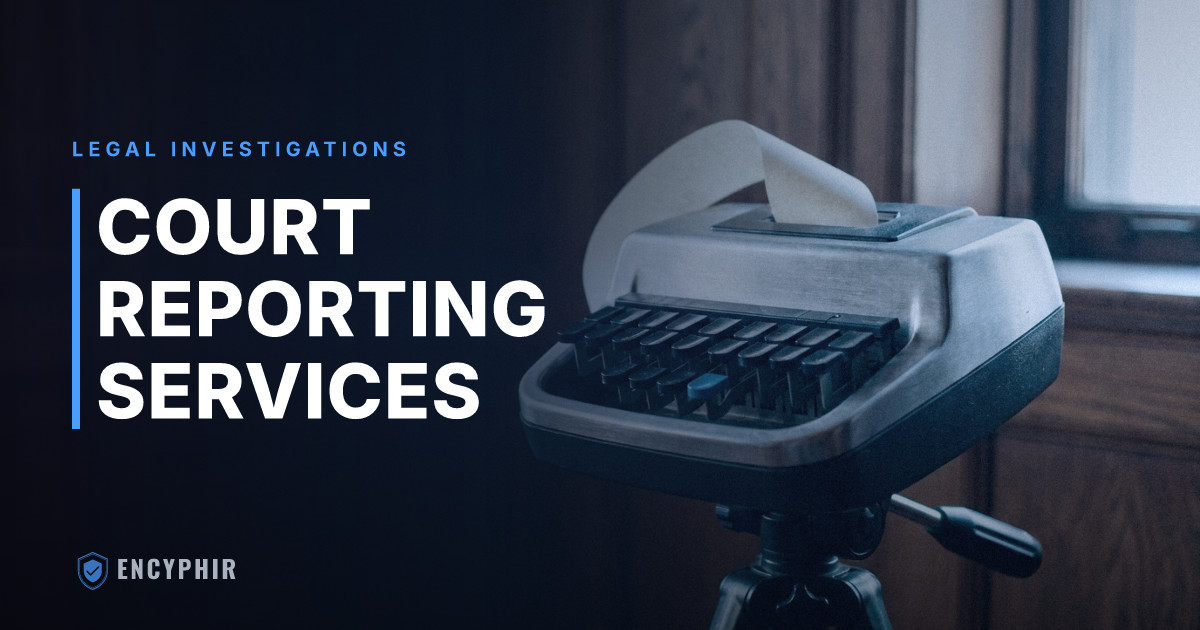
Court reporters create the official record of legal proceedings. Depositions, trials, hearings, and arbitrations all depend on accurate transcription. The quality of that record can affect appeals, impeachment, and the management of complex litigation. Understanding what court reporting services offer, how to select vendors, and how to use the record strategically helps attorneys get more value from this core part of litigation practice.
What Court Reporters Do
A certified court reporter captures verbatim records of spoken words in legal proceedings. They use a stenographic machine, voice writing, or digital reporting technology. The reporter then produces a certified transcript that becomes the official legal record.
Certified shorthand reporters (CSRs) are licensed in most states and must meet education and competency standards. The certification matters. A certified transcript carries evidentiary weight that an uncertified recording does not, and courts treat the certified transcript as the authoritative record.
Beyond transcription, many court reporters offer additional services that have become standard in complex litigation:
Real-time reporting. The transcript streams to counsel's laptops or tablets as it is being generated. Attorneys can annotate the transcript in real time, search for prior testimony, and flag key passages during the proceeding.
Rough drafts. A preliminary transcript delivered within hours of the proceeding, before the final certified transcript is completed. Useful for immediate review following key depositions.
Exhibit management. Court reporters organize, number, and preserve deposition exhibits, creating a reliable record that matches the transcript.
Video synchronization. When a deposition is also videotaped, syncing the video with the transcript creates a searchable multimedia record that can be used in trial presentation.
Remote Depositions and Technology
The shift to remote depositions accelerated significantly after 2020. It has become a standard option even where in-person depositions are feasible. Remote deposition platforms integrate video conferencing with real-time reporting, exhibit sharing, and transcript delivery.
Remote depositions raise several practical issues that attorneys should be aware of:
- Technology failures that can disrupt the proceeding
- Exhibit authentication and handling
- The challenge of reading non-verbal cues through video
- Jurisdiction-specific rules about remote testimony
Selecting Court Reporting Services
Several factors matter when selecting a court reporting vendor for a significant matter:
Reporter qualifications. Confirm state licensure and certification. Look for national certifications such as Registered Professional Reporter (RPR) or Registered Merit Reporter (RMR), and experience in the relevant practice area or subject matter.
Turnaround capability. For high-volume litigation or depositions with tight timelines, the vendor must deliver transcripts on schedule. Confirm rush delivery capabilities and pricing in advance.
Technology infrastructure. For real-time reporting, the platform and its reliability are critical. Technical failures during a significant deposition are avoidable with adequate preparation.
Confidentiality and data security. Deposition transcripts often contain highly sensitive information. The court reporting firm should have clear policies on transcript storage, access control, and data security.
Using the Record Strategically
The deposition transcript is a powerful tool in litigation because it locks in testimony. Effective use of the record requires:
Knowing the prior record before entering a deposition. A witness who has given prior testimony in other proceedings, administrative hearings, or prior litigation has a record that should be reviewed before the deposition begins.
Using real-time capabilities to track prior testimony. Real-time reporting allows counsel to immediately spot when testimony diverges from prior statements.
Preserving the record for trial. Inconsistencies between deposition and trial testimony are impeachment opportunities, but only if counsel has the deposition record organized and accessible for use at trial.
Preparing the Witness and the Record Before the Deposition
Much of what determines the value of a deposition transcript happens before the court reporter turns on the machine. Attorneys who treat the reporter as a passive stenographer miss chances to shape a cleaner, more useful record. A brief pre-deposition conversation with the reporter can address several items:
- Unusual spellings
- Technical vocabulary
- Exhibit handling protocols
- Preferences for rough drafts or expedited delivery
In matters involving medical terminology, engineering concepts, or specialized financial instruments, give the reporter a glossary in advance. This reduces transcript errors and the need for later corrections.
Witness preparation matters equally. Counsel should remind witnesses to let each question finish before answering, to speak rather than nod, and to spell unusual names and places for the record. In remote proceedings, attorneys should confirm that witnesses have a quiet space, a stable internet connection, and a working camera and microphone. When the stakes are high, a technology rehearsal the day before can prevent mid-deposition disruption that erodes a reporter's ability to capture every word.
Background work on the witness should be completed before the deposition begins, not during it. Our background investigations team assembles litigation-grade profiles on deponents. These cover prior sworn testimony, regulatory filings, civil and criminal history, professional licensure, and public statements that contradict anticipated positions. That preparation lets counsel frame questions precisely and identify the documentary foundation needed for effective impeachment.
Common Transcript Errors and How to Catch Them
Even skilled reporters produce transcripts that contain errors, and attorneys who assume otherwise pay the price later. The most common issues include:
- Misheard homophones
- Incorrect speaker attributions
- Dropped words
- Inaccurate exhibit numbering
When a deposition involves overlapping speakers, heated exchanges, or accented English, the error rate climbs.
Most jurisdictions provide a limited window for the deponent to review and submit an errata sheet correcting the transcript. Counsel should treat that review as a substantive task, not a clerical one. A careful read identifies transcription errors. It also flags places where the witness's testimony is ambiguous, contradictory, or vulnerable to clarification by opposing counsel at trial. When errors are material, counsel may need to ask the reporter to listen to the audio backup and produce a corrected certified transcript.
For videotaped depositions, the video itself becomes a check on the transcript. A side-by-side review of video and transcript often reveals pauses, gestures, and inflections that the written record cannot convey. Those observations matter when designating deposition testimony for trial, especially in cases where a witness's demeanor will influence how jurors weigh the testimony.
Integrating Investigations With Deposition Strategy
Court reporting services are most valuable when integrated with the broader investigative work supporting a matter. In employment, commercial, and executive misconduct cases, the deposition is often the stage at which investigative findings enter the evidentiary record. An employee accused of diverting funds, a business partner accused of breaching a non-compete, or an officer accused of misrepresentation will all be confronted at deposition with documents and data developed through investigation.
Our digital forensics team recovers email, messaging content, file system artifacts, and device usage data that frequently becomes the foundation of deposition questioning. A witness can deny a conversation until confronted with a timestamped message recovered from a corporate device. In executive misconduct investigations, forensic findings often dictate the entire deposition outline, with exhibits sequenced to build toward specific admissions.
Surveillance evidence plays a similar role in personal injury, workers' compensation, and domestic matters. Video showing a claimant engaged in activity inconsistent with alleged physical limitations becomes compelling impeachment material when introduced at the right moment in a deposition. Coordinating the timing of surveillance with deposition scheduling ensures the evidence is fresh, authenticated, and admissible.
Working With Court Reporters Across Multiple Jurisdictions
Litigation that spans multiple states, or that involves witnesses located outside the forum jurisdiction, adds layers of complexity to court reporting arrangements. Several rules vary by state:
- Reporter licensure rules
- Notarial authority for administering oaths
- Rules about who may appear remotely or in person
- Which jurisdiction's procedural rules govern the deposition
For multi-jurisdictional matters, a national court reporting firm with licensed reporters in each relevant state simplifies logistics and reduces the risk that a transcript will later be challenged on foundational grounds. Counsel should confirm in advance that the reporter assigned to the deposition is authorized to administer the oath in the location where the witness physically sits, not merely where the attorneys are located. For international depositions, counsel should coordinate with consular officials or use mechanisms under the Hague Evidence Convention when applicable.
Coordination with investigators becomes especially important when witnesses are difficult to locate or serve. Our firm supports law firms with witness location, subpoena service coordination, and background work on out-of-state deponents. This ensures depositions proceed as scheduled rather than collapsing due to service failures or incomplete witness information.
Preserving and Using the Record After the Deposition
The work of the court reporter ends when the certified transcript and any video are delivered. The work of the litigation team continues. A deposition record that is not organized, indexed, and integrated into the broader case file loses most of its value. Effective litigation teams index depositions by topic, witness, and exhibit immediately after delivery. They build a searchable database that can be consulted during motion practice, expert preparation, and trial.
For complex matters with dozens of depositions, transcript management software lets counsel search across every deposition for specific phrases, witnesses, or exhibits. That capability turns transcripts from static records into an active litigation asset. When a witness at trial contradicts deposition testimony given six months earlier, counsel should be able to produce the page and line of the contradiction within seconds.
Our investigative team supports law firms with background investigation, evidence collection, and witness research for litigation. Our surveillance team documents witness behavior and real-world activity that becomes part of the deposition record. Our digital forensics team handles the digital-evidence work that increasingly supplements traditional transcripts. Contact us to discuss your matter.