Documenting a Catfishing Case: Preserving Evidence Banks, Platforms, and Courts Will Accept
 August 24, 2026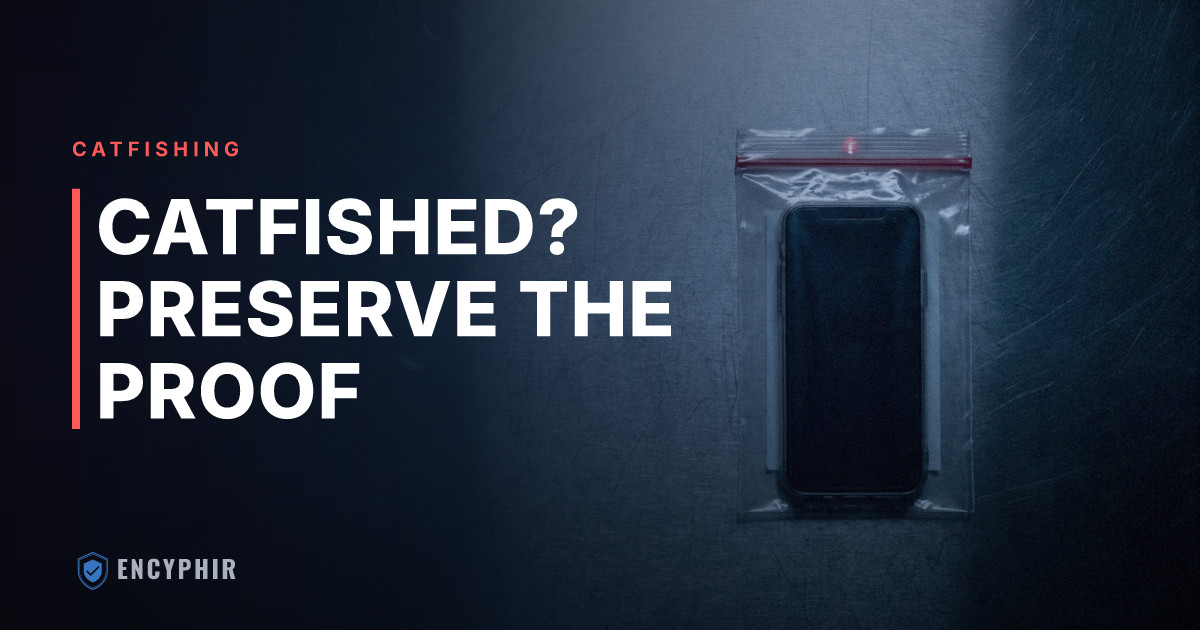
Catfishing has evolved from a personal heartbreak into a sophisticated form of fraud that costs victims billions of dollars each year. Whether the target is an executive tricked into a fraudulent wire transfer, a retiree drained of savings, or an employee manipulated into leaking proprietary data, the aftermath almost always leads to the same question: can the evidence be recovered, and will anyone accept it?
Banks want proof before they reverse a transaction. Social media platforms demand documentation before they suspend an account. Courts require a verifiable chain of custody before any digital artifact can be admitted. Getting this right from the first hour matters enormously, and most victims unknowingly compromise their own case by deleting messages, blocking the impersonator, or downloading screenshots in ways that strip critical metadata. This guide outlines how professional investigators document a catfishing case so the evidence holds up where it counts.
Why Catfishing Evidence Is Uniquely Fragile
Unlike physical evidence, digital communications can vanish in seconds. A scammer who suspects exposure can delete an account, wipe a conversation, or migrate the victim to an encrypted channel that self-destructs messages. Even well-meaning victims cause damage: taking a screenshot of a phone with another phone, for example, strips away the underlying metadata that authenticates when and where the message was sent.
The strength of a catfishing case depends on three factors: completeness of the record, integrity of the collection process, and the ability to demonstrate an unbroken chain of custody. Banks, platforms, and courts each weigh these factors differently, but none will accept evidence that appears altered, incomplete, or improperly gathered.
Preserving Digital Communications the Right Way
The first rule is simple: stop interacting with the impersonator, but do not delete anything. Investigators working a catfishing matter typically follow a structured preservation protocol that includes:
- Forensic imaging of the victim's phone, tablet, or computer to capture messages, app data, and system logs in their native form.
- Metadata extraction from images, videos, and voice notes to establish timestamps, geolocation where available, and the device used to send them.
- Header analysis of emails to trace originating IP addresses and mail server routes.
- Platform-native exports from Facebook, Instagram, WhatsApp, and dating apps, which include authentication data that screenshots do not.
- Web capture tools that timestamp and hash preserved pages so their integrity can be proven later.
Our digital forensics team uses court-validated tools and documented procedures to ensure every artifact collected can withstand challenges from opposing counsel or platform legal teams. When a victim brings us a phone within the first 48 hours, our recovery rate for deleted content is significantly higher than after weeks of continued use.
What Banks and Financial Institutions Require
When money has moved, the bank's fraud department becomes a critical audience. Most institutions require a documented timeline showing when the relationship began, how trust was established, when funds were requested, and how the transfer was authorized. They will also want:
- Copies of the fraudulent communications with authenticated timestamps.
- Evidence that the recipient identity was fabricated, often through reverse image searches, social media forensics, and open source intelligence.
- A written incident report from a licensed investigator or law enforcement agency.
Without this documentation, banks routinely deny reversal requests on the grounds that the victim authorized the transaction. A properly documented investigation shifts the analysis toward fraud and coercion, giving the bank the justification it needs to act.
Building a Court-Admissible Record
Courts apply a higher standard than banks or platforms. To be admissible, digital evidence must be authenticated, relevant, and shown to be free of tampering. This requires:
- A documented chain of custody from collection through analysis.
- Hash values (typically SHA-256) generated at the point of collection and verified at each handoff.
- Sworn declarations or affidavits from the investigator who performed the work.
- Expert testimony available if the evidence is challenged.
In cases involving corporate victims, executive impersonation, or blackmail, we often coordinate directly with counsel. Our work with law firms and their clients is designed to produce reports that plug directly into civil litigation, criminal referrals, or regulatory filings. When executive misconduct or internal compromise is suspected, our corporate investigation services extend the same forensic rigor into the workplace environment.
Acting Quickly Protects the Case and the Victim
Every hour that passes after a catfishing scheme is discovered increases the risk that evidence disappears, funds move beyond recovery, and the impersonator resurfaces under a new identity to target someone else. Professional documentation is not just about winning in court; it is about giving victims and their institutions the tools to respond decisively.
If you, a client, or an employee has been targeted by a catfishing scheme, contact Encyphir Risk Management today. Our licensed investigators and forensic examiners can preserve what remains, reconstruct what has been lost, and deliver evidence that banks, platforms, and courts will accept.