Forensic Video Analysis: How Video Evidence Works in Legal Cases
 August 5, 2025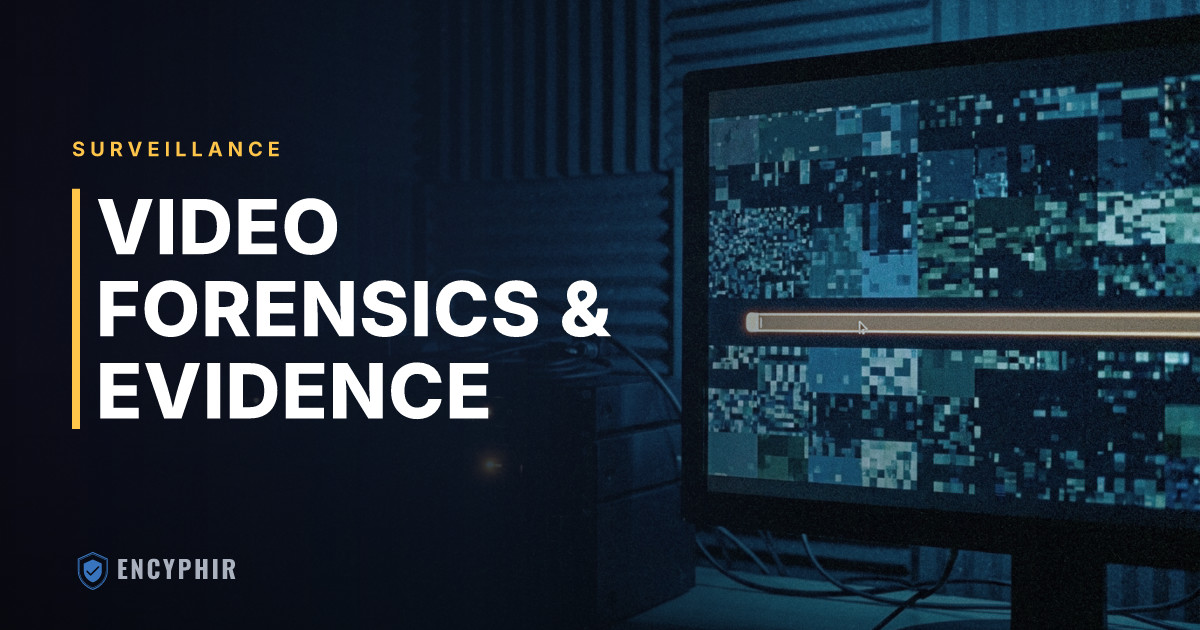
Video surveillance footage is now a standard feature of criminal and civil proceedings. Security cameras cover almost every public and commercial space. Body-worn cameras document law enforcement encounters. Personal devices produce high-resolution video records of events that once would have relied on witness testimony alone. But not all video evidence is treated equally by courts, and not all footage is as straightforward as it appears.
What Forensic Video Analysis Actually Is
Forensic video analysis is the scientific examination, enhancement, and authentication of digital video for use in legal proceedings. It is a recognized specialty within digital forensics, with its own methodological standards, professional organizations, and expert witness requirements.
The discipline covers several distinct types of work:
Video enhancement. Raw surveillance footage is often low-resolution, poorly lit, or obscured by camera artifacts. Forensic enhancement uses specialized software and techniques to clarify detail without changing the underlying content. A properly enhanced image can reveal a face, a license plate, or a physical attribute that is not visible in the original footage.
Video authentication. Digital video files can be altered, trimmed, compressed, or fabricated. Forensic authentication examines metadata, compression artifacts, and frame-level data to determine whether footage is original and unmodified.
Footage recovery and reconstruction. Overwritten, corrupted, or partially deleted video files can sometimes be recovered through forensic methods. When original footage has been lost or degraded, a timeline can sometimes be rebuilt from multiple partial sources.
Expert analysis and reporting. A forensic video analyst examines footage to document what it shows, what conclusions can and cannot be drawn from it, and how it fits into the factual record of an event. The analysis is formatted to meet evidentiary standards for court presentation.
How Video Evidence Is Admitted in Court
Video evidence must meet several standards to be admitted and to carry weight in legal proceedings.
Chain of custody. Courts require documentation showing the footage has not been altered between its original recording and its presentation in court. That means proper handling from initial extraction through storage and presentation, with documentation at each step.
Authentication. The evidence must be what it claims to be. Authentication may require testimony from the person who collected it, metadata analysis, or expert review confirming the footage has not been altered.
Relevance and foundation. The footage must be relevant to the case. The party offering it must establish a foundation connecting it to the facts at issue.
Footage collected by a professional investigator following proper evidence handling protocols is far more likely to survive a legal challenge than footage obtained informally, even if the content is identical.
Common Issues With Video Evidence
Several issues come up repeatedly in cases involving video evidence.
Compression and quality. Many surveillance systems record at low resolution or apply heavy compression to manage storage. Footage that looks usable on a monitor may not hold up when enlarged for courtroom presentation. Forensic analysis can assess what the footage actually shows versus what it appears to show.
Timestamp reliability. Camera clocks drift and are often not synchronized. A timestamp on footage may not accurately reflect when the event occurred. Forensic analysis can sometimes determine actual timing from other data points in the file.
The "CSI effect." Jurors who expect enhancement to produce cinematic clarity are sometimes disappointed by what forensic analysis can realistically achieve. A qualified expert explains what enhancement can and cannot do, and testifies to the limits of the analysis as clearly as to its findings.
Alterations and deepfakes. Digitally manipulated video is increasingly sophisticated. Detecting manipulation requires specialized software and expertise that goes beyond a standard review of footage.
When to Involve a Forensic Video Expert
Any legal matter in which video plays a central role benefits from professional review. Situations that commonly require forensic video analysis include:
- Personal injury and workers' compensation cases, where surveillance footage of an allegedly injured party is a key piece of evidence.
- Insurance defense and fraud investigations involving video documentation of activity inconsistent with claimed injuries or circumstances.
- Criminal defense, where footage captured by third parties, body cameras, or surveillance systems is offered by the prosecution.
- Family law matters, where video evidence is offered in custody or domestic proceedings.
- Corporate investigations involving surveillance footage of suspected theft, harassment, or misconduct.
Our digital forensics team works alongside our surveillance operations specialists to ensure that video collected in the field is handled and analyzed to the standards required for legal use. Both services are available independently or as part of a coordinated investigation.
Attorney-directed engagements are a core part of our video-analysis practice, with reports structured for admissibility and expert-witness presentation. Contact Encyphir Risk Management to discuss how forensic video analysis fits into your legal matter.
The Technical Workflow Behind a Forensic Video Examination
A proper forensic video examination follows a disciplined sequence that protects both the evidence and the conclusions drawn from it. The first step is acquisition. Whenever possible, the analyst works from the native file rather than a screen-recorded copy, a phone video of a monitor, or a converted MP4 that has been re-encoded by playback software. Native proprietary formats from DVR and NVR systems preserve the original frame structure, embedded metadata, and any timestamp data written by the recorder. Conversions and screen captures strip this information away. They also introduce new compression artifacts that can be mistaken for evidence of tampering.
Once the original file is secured, the analyst creates a verified forensic copy using hashing algorithms such as SHA-256. This hash value functions as a digital fingerprint. If the file is altered in any way, even by a single bit, the hash will no longer match. Every later analytical step is performed on working copies, with the original preserved untouched.
Analysis itself is documented as it happens. Enhancement techniques such as deinterlacing, frame averaging, sharpening, contrast adjustment, and lens correction are each logged with the software used, the parameters applied, and the rationale. This documentation is what allows the analyst to defend the work under cross-examination. An enhancement that cannot be replicated by another qualified examiner from the same source file is not forensically sound, no matter how compelling the result appears on screen.
Pulling Footage From Real-World Systems
In theory, collecting surveillance video is a matter of plugging in a drive and exporting a file. In practice, it rarely works that way. Commercial DVR systems often use proprietary codecs that require the manufacturer's player to view. Many of these systems overwrite footage on a rolling basis, sometimes within 72 hours, so delay in collection can eliminate the evidence entirely. Some systems export only to FAT32-formatted drives, which cannot hold files larger than 4 GB. Long events get split across multiple files with gaps at the transitions.
Cloud-based systems bring their own complications. Footage from doorbell cameras, cloud NVR platforms, and smart building systems is typically accessed through a user account, which raises authentication and custody questions. Who downloaded the file, when, and from which account matters as much as what the file shows. In workplace settings, footage pulled from an employer's system by an IT administrator without documentation of the retrieval process can be challenged on foundational grounds even when its content is clearly relevant.
Encyphir investigators approach collection with these realities in mind. Where a case is likely to involve litigation, we recommend preservation requests be issued immediately and that retrieval be performed or supervised by a trained examiner. Our security consulting practice also advises organizations on camera system configuration, retention settings, and retrieval procedures before an incident occurs. That is far less expensive than trying to reconstruct missing footage afterward.
Video Evidence in Workplace and Institutional Investigations
Video analysis plays an increasingly central role in internal investigations. In executive misconduct matters, surveillance footage from office lobbies, parking structures, elevators, and common areas is often the corroborating evidence that either supports or contradicts witness accounts. The question is frequently not whether an event occurred but when, with whom, and in what sequence. Precise timestamp analysis and cross-referencing of multiple camera angles can establish a verifiable timeline that resolves disputed facts.
School districts face similar challenges. Bus camera footage, classroom cameras, athletic facility surveillance, and hallway systems all generate video that may become central to disciplinary hearings, civil rights complaints, or litigation. Institutional retention policies vary widely, so footage is sometimes overwritten before anyone realizes it will be needed. Districts that engage investigators early, particularly in matters that may require out-of-district investigation, preserve their ability to produce reliable evidence if a matter proceeds to a formal proceeding.
In fraud and loss matters, video frequently works in concert with financial analysis. A Certified Fraud Examiner reviewing transaction records alongside point-of-sale camera footage can tie specific individuals to specific events in a way that neither dataset accomplishes alone. This kind of coordinated examination is a standard component of our fraud examination work.
Practical Guidance for Clients Considering Video Analysis
Clients can improve outcomes by taking a few concrete steps early. Identify every potential source of footage, not just the obvious one. In a typical commercial incident, there may be footage from:
- the subject premises
- neighboring businesses
- municipal cameras
- transit systems
- private vehicle dash cameras
- bystander phones
Each has a different retention window and a different process for preservation.
Avoid playing, editing, or converting the footage before analysis. Well-intentioned efforts to clean up an image in consumer software can permanently degrade the evidentiary value of the file. If the footage needs to be shared with counsel or with an investigator, share it in its original container with its original filename and metadata intact.
Document who has handled the footage and when. Even an informal log of which laptop held the file, which USB drive it was copied to, and who had access establishes the beginning of a defensible chain of custody. Engage analysts before key depositions or hearings, not the week before trial. Enhancement, authentication, and timeline reconstruction take time, and rushed work is both more expensive and more vulnerable to challenge.
To discuss how forensic video analysis applies to a specific matter, reach out through our contact page or get started with a confidential case assessment.