Ghost Employee Fraud: How It Works and How CFEs Catch It
 June 1, 2026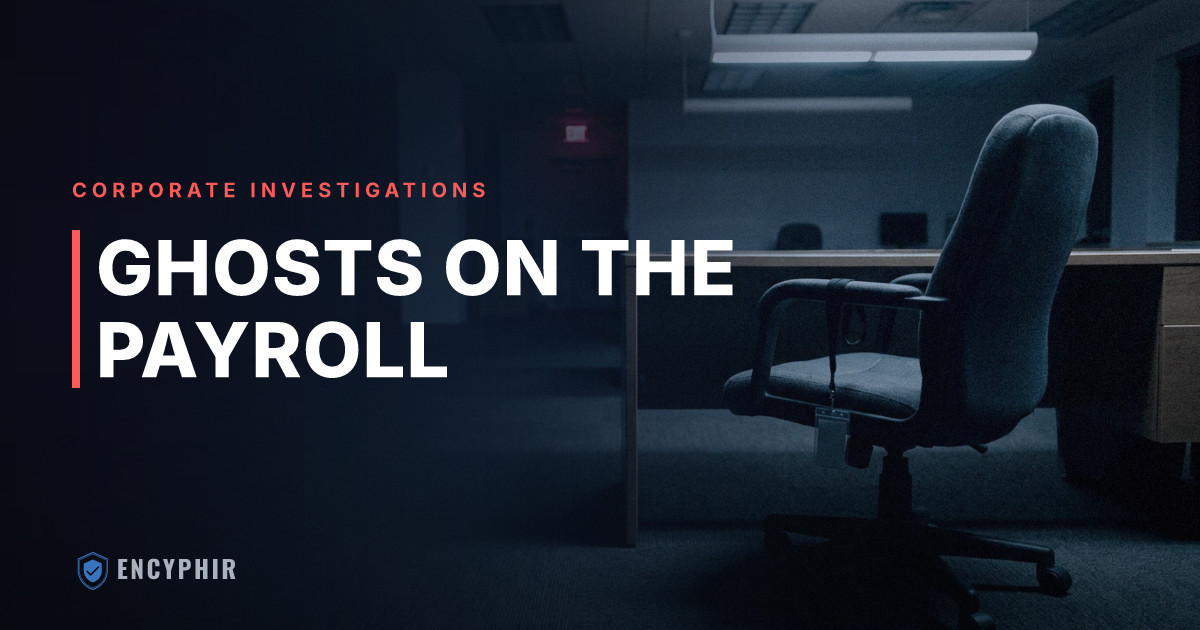
Every payroll cycle, billions of dollars flow out of organizations to employees who do not exist. They have no desk, no badge, no productivity metrics, and no Monday morning commute. Yet they collect paychecks, accrue benefits, and quietly drain company resources for months or even years before anyone notices. This is ghost employee fraud, one of the most persistent and costly forms of payroll abuse, and it thrives in environments where internal controls are weak and oversight is fragmented.
For business owners, HR leaders, and finance executives, understanding how this scheme operates is the first step toward stopping it. Certified Fraud Examiners (CFEs) use a combination of data analytics, forensic accounting, and investigative techniques to expose ghost employees and the insiders who create them. Here is what you need to know.
What Is a Ghost Employee?
A ghost employee is a fabricated or improperly retained name on a company's payroll. The fraudster, typically someone with access to HR or payroll systems, generates paychecks for this fictitious person and then diverts the funds to themselves or an accomplice. Ghost employees generally fall into one of three categories:
- Fictitious individuals invented entirely by the fraudster, complete with fake Social Security numbers and bank accounts.
- Former employees whose records were never deactivated after termination, allowing wages to continue flowing into accounts the fraudster controls.
- Real people who are unaware their identity is being used, such as relatives, friends, or even deceased individuals.
The Association of Certified Fraud Examiners consistently ranks payroll schemes among the most damaging forms of occupational fraud, with median losses stretching well into six figures and detection often taking 18 months or longer.
How the Scheme Operates
Ghost employee fraud usually requires the perpetrator to control, or collude with someone who controls, several key payroll functions. The classic warning signs include:
- Adding the employee to the system. The fraudster creates a new hire record, often using a name similar to a real employee or a relative's identity.
- Routing the paycheck. Direct deposit is the preferred method, with funds flowing into a bank account the fraudster owns or can access.
- Suppressing documentation. Tax forms, benefits enrollments, and HR files are minimized or routed to a P.O. box the fraudster monitors.
- Maintaining the illusion. Time sheets are forged, performance reviews are skipped, and the ghost is kept off team rosters and email distribution lists.
The scheme often grows over time. What begins as a single ghost may expand into multiple fake employees, especially in large organizations where managers approve payroll for departments they rarely visit in person.
Red Flags Every Business Should Monitor
Certain indicators should prompt immediate scrutiny from leadership and internal audit teams:
- Employees with no tax withholdings, no benefits deductions, or no direct deposit history changes
- Multiple employees sharing the same address, phone number, or bank account
- Payroll records lacking a corresponding personnel file or onboarding documentation
- Workers who never take vacation, never submit expense reports, and never appear on company communications
- Managers who insist on personally handling payroll paperwork for their teams
- Discrepancies between headcount reported to finance versus headcount visible on the floor
When these patterns appear, a discreet corporate fraud investigation can determine whether ghost employees exist and identify who is responsible.
How CFEs Uncover Ghost Employees
Certified Fraud Examiners approach payroll fraud methodically, blending technology with old-fashioned investigative work. Common techniques include:
Data analytics and matching. Investigators cross-reference payroll records against tax filings, government databases, and HR systems. Duplicate Social Security numbers, addresses, or routing numbers frequently surface ghosts hiding in plain sight.
Physical verification. A simple but effective method is requiring every employee to pick up a paycheck or ID badge in person on a specific day. Ghosts cannot show up, and the fraudster must scramble to explain absences.
Forensic review of digital records. Email metadata, system access logs, and HR portal activity often reveal when records were created, who modified them, and from which device. Our team supports clients with digital forensics capabilities that can recover deleted files and trace user activity across systems.
Background and identity verification. Running fresh background checks on suspect employees frequently exposes fabricated identities, fake credentials, or links to employees already on the payroll.
Interviews and surveillance. When digital evidence points to a suspect, structured interviews and discreet surveillance can confirm collusion, lifestyle changes inconsistent with reported income, or contact between the fraudster and accomplices.
Building a Defense Before Fraud Takes Root
Prevention is always less expensive than investigation. Organizations should separate the duties of hiring, payroll processing, and check distribution so no single employee controls the entire cycle. Mandatory vacations, periodic payroll audits, and surprise headcount verifications all create friction for would-be fraudsters. Strong onboarding documentation requirements and regular reconciliation between HR and finance records close the gaps where ghosts typically appear.
If you suspect payroll irregularities in your organization, do not confront the issue alone. Discreet, professional investigation protects evidence, preserves employee relationships, and gives you the documentation needed for recovery or prosecution. Contact Encyphir Risk Management today to speak with a Certified Fraud Examiner about a confidential payroll review or fraud investigation tailored to your business.