High-Profile Surveillance Cases: Lessons from the Field
 October 8, 2026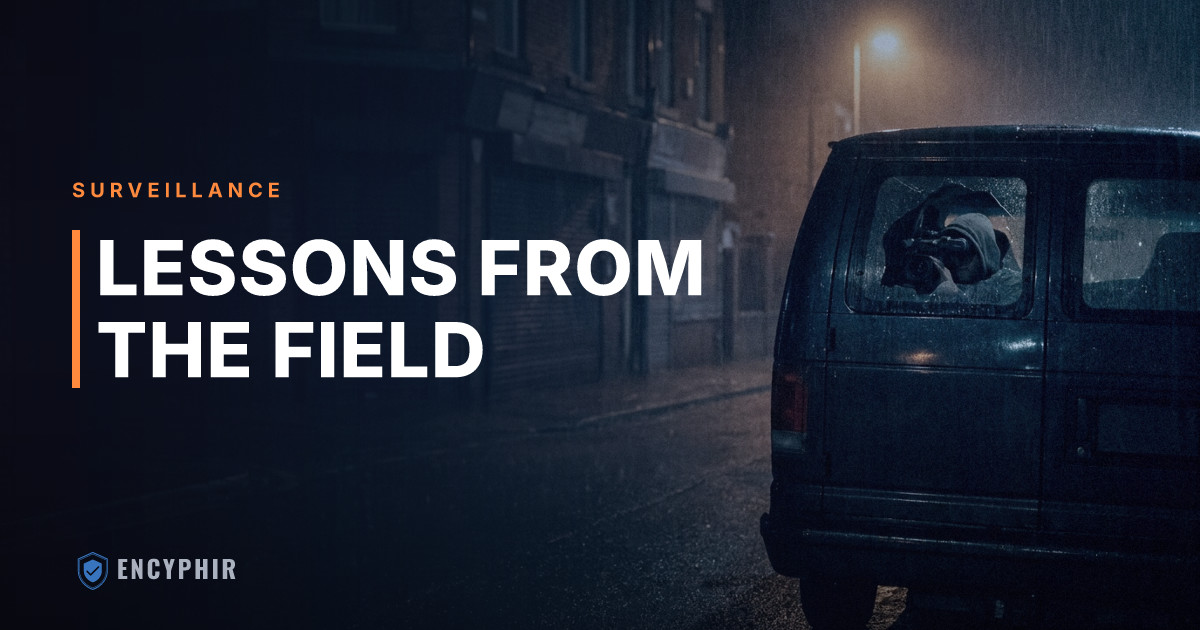
High-Profile Surveillance Cases: Lessons from the Field
Surveillance is often portrayed in film and television as glamorous work involving unmarked vans, long-range lenses, and dramatic confrontations. The reality, particularly in high-stakes corporate and legal matters, is far more disciplined. Successful surveillance operations are built on preparation, patience, and legal precision. Over the years, our investigators have handled cases involving executive misconduct, insurance fraud, intellectual property theft, and complex marital disputes. Each case has reinforced a core truth: the difference between a courtroom-ready result and a costly liability comes down to methodology.
Below, we share lessons drawn from real-world surveillance engagements that business leaders, attorneys, and risk managers should keep top of mind.
Lesson 1: Preparation Determines Outcome
One of the most instructive cases in recent memory involved a senior executive suspected of diverting client relationships to a competing venture. The client demanded immediate action, but our team insisted on a 72-hour intelligence-gathering phase before deploying any field assets. That preparation revealed that the subject varied his commuting patterns, used two personal vehicles, and frequently held meetings at a private club rather than restaurants. Without that groundwork, surveillance would have failed within hours.
The lesson is simple: rushing into the field wastes resources and risks exposure. Effective surveillance operations begin with route analysis, subject profiling, and clear objectives. When the client understands what evidence is required to support their legal or business strategy, investigators can build a plan that delivers admissible, actionable results.
Lesson 2: Legal Boundaries Are Non-Negotiable
A cautionary case from several years ago involved a competitor firm that had commissioned surveillance without properly vetting jurisdictional rules on GPS tracking. The evidence gathered was ultimately thrown out, and the client faced civil exposure. Our own engagements are structured to avoid exactly this outcome.
Every jurisdiction has different rules regarding vehicle tracking, video recording in semi-public spaces, and the use of pretext. In one matter supporting a law firm's civil litigation, our team declined to use a tracking device the client had requested because state law required specific ownership documentation we could not verify. The client was initially frustrated, but the case ultimately succeeded because every piece of evidence we produced was defensible. When working alongside counsel, our investigators coordinate closely with legal teams to ensure every method aligns with both statute and case strategy.
Lesson 3: Technology Amplifies, But Does Not Replace, Field Work
Modern surveillance increasingly blends physical observation with digital intelligence. In a recent intellectual property theft investigation, physical surveillance placed a former employee at a competitor's facility on three consecutive weekends. That alone was suggestive but not conclusive. It was the parallel digital forensics work, recovering deleted file transfers from a company-issued laptop, that turned observation into a provable case.
The lesson for business clients is that surveillance rarely operates in isolation. Cell phone records, email metadata, access logs, and social media patterns all inform where and when investigators should be positioned. Conversely, digital evidence often needs physical corroboration to reach the standard required for termination, litigation, or law enforcement referral.
Lesson 4: Discretion Protects the Client as Much as the Case
High-profile investigations frequently involve subjects who are media-savvy, legally represented, or surrounded by loyal staff. In one matter involving suspected executive misconduct at a publicly traded company, a single overheard conversation between two investigators at a hotel bar could have tipped off the subject and destroyed months of work. Strict operational discipline, including compartmentalized briefings and cover identities for field agents, prevented that outcome.
Discretion also protects the client's reputation. When we handle sensitive corporate misconduct investigations, we build case files that assume eventual disclosure to boards, regulators, or courts. Every note, every photograph, and every report is drafted with the understanding that it may one day be scrutinized under oath.
Lesson 5: The Best Surveillance Ends Quietly
Successful surveillance rarely produces the dramatic moment portrayed in fiction. More often, it produces a quiet, well-documented sequence of events that supports a decision the client already suspected they needed to make. A terminated employee. A settled divorce. A recovered asset. A dismissed claim. The measure of success is not spectacle but clarity: did the client receive the evidence they needed to act with confidence?
That clarity comes from experienced investigators who understand that every case is a chain of small decisions, each of which must hold up to scrutiny.
Bringing These Lessons to Your Situation
Whether you are a general counsel weighing an internal investigation, an executive facing a suspected breach of fiduciary duty, or a business owner concerned about competitive threats, the right surveillance strategy can transform uncertainty into decisive action. Encyphir Risk Management brings decades of field experience, legal fluency, and technical capability to every engagement.
If you are evaluating a sensitive matter and need guidance on whether surveillance is the right tool, contact our team for a confidential consultation. We will help you determine the best path forward, one that protects your interests today and stands up to scrutiny tomorrow.