Homeowners and Property Insurance Fraud: AOB, Water, and Storm Schemes
 April 6, 2026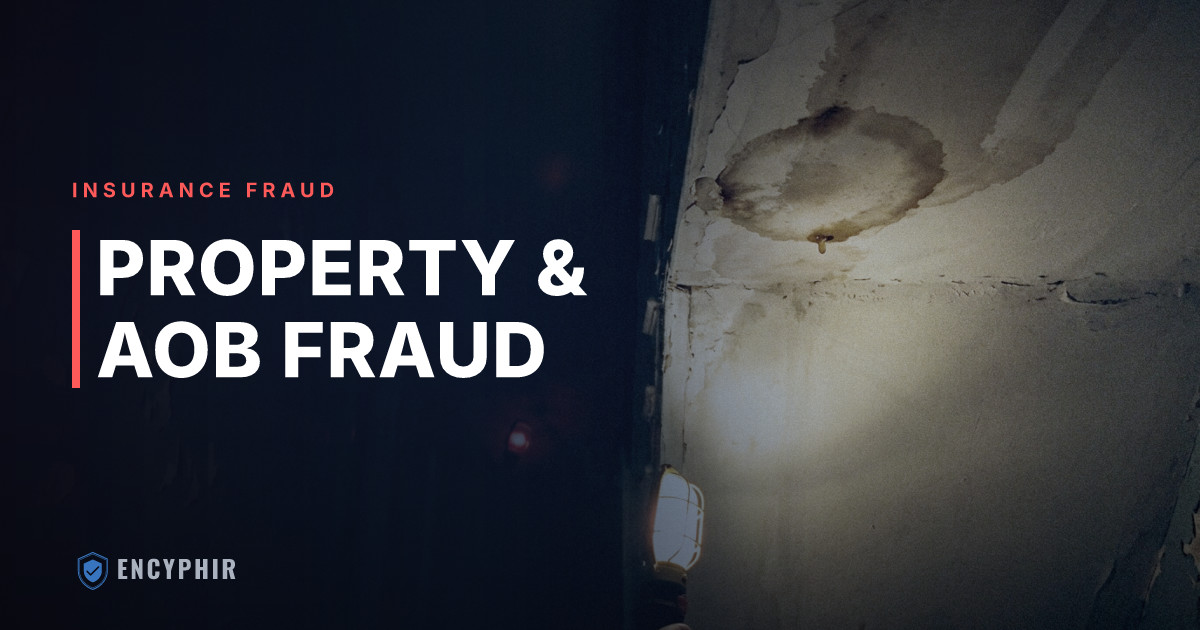
Homeowners and property insurance fraud clusters around a small set of recurring schemes. Most are soft fraud: inflating otherwise legitimate claims. The dollar magnitude per claim can still be significant, especially where restoration contractors or public adjusters drive the claim.
Water Damage Fraud
Water damage is the most commonly inflated property claim. Common schemes:
- Pre-existing damage bundled in. A slow leak that developed over time gets bundled into a recent sudden-loss event.
- Inflated scope. Dry-out and mitigation billed far beyond what the actual loss required.
- Restoration contractor kickbacks. Contractors paying referral fees to adjusters or public adjusters to inflate scope.
Good water-damage investigation combines scene inspection, moisture mapping, and sometimes engineering review of the actual loss cause.
Hurricane, Wind, and Storm Damage Fraud
Post-storm seasons produce waves of fraud activity:
- Roof damage claims from storms that didn't actually produce wind speeds sufficient to cause the claimed damage
- Pre-existing roof deterioration reported as storm damage
- Contractor solicitations ("storm chasers") promising to handle the claim if the homeowner signs over benefits
Storm claim investigation typically includes weather data research, aerial imagery comparison (pre- and post-storm), contractor investigation, and scene inspection.
Theft and Burglary Fraud
Theft and burglary fraud is largely about what's claimed versus what was actually owned:
- Phantom contents - items claimed that were never in the home
- Inflated value - items legitimately owned but claimed at values far above actual
- Jewelry claims - particularly prone to valuation disputes and receipts that look manufactured
Documentation reviews and claimant interviews are the core of theft fraud investigation. Reviews cover receipts, photos, social media, and insurance schedules. We touch on the social media piece in our social media investigation post.
Assignment of Benefits (AOB) Abuse
AOB has been the defining property fraud issue in Florida and is spreading to other states. The mechanic:
- A water loss, roof loss, or storm loss occurs
- The homeowner signs an assignment of benefits to a restoration contractor
- The contractor controls the claim, bills aggressively, and sues the carrier when the scope is disputed
- The homeowner is largely a bystander once the AOB is signed
AOB investigations focus on:
- Contractor investigation
- Actual scope of loss
- The legitimacy of signed AOB documents
- In some cases, the overall business model of contractors that appear repeatedly across claims
See our business ownership investigations post for the structural side.
Fire Loss Fraud
Fire losses range from straightforward accidental to highly suspicious. Red flags include:
- Financial distress (pending foreclosure, bankruptcy)
- Valuable contents recently removed from the home
- Origin-and-cause inconsistent with an accidental fire
- Coverage recently increased
Cause-and-origin experts typically lead fire investigations. Investigators support with financial investigation, witness interviews, scene canvass, and prior-loss history. The red flags post covers the financial signal set that often drives fire fraud referrals.
Public Adjuster and Contractor Fraud
Public adjusters and contractors are not inherently fraudulent. Investigation is warranted where coordination between an adjuster and contractor drives claim value beyond the actual loss. Patterns that recur across unrelated claims trigger fraud-ring level investigation: same adjuster, same contractor, same inflated scope.
Investigation Tools for Property Fraud
- Scene investigation and loss documentation
- Origin-and-cause coordination for fire and water losses
- Prior-claims history (CLUE, ISO ClaimSearch)
- Contractor and public adjuster background investigation
- Recorded statements from homeowners and contractors
- Examination under oath (EUO) support
Roof Schemes and the Storm Chaser Economy
The most visible property fraud pattern of the last decade has been the organized roof scheme. A crew moves into a region following a hailstorm or named wind event. They canvass neighborhoods door to door and offer homeowners a "free roof inspection." The inspector almost always finds damage, often by creating it. Marks from a ball-peen hammer, a screwdriver punched into shingle granules, or a weighted cleat drawn across a slope can be hard to distinguish from hail bruising without careful forensic comparison. The contractor then signs the homeowner to an AOB or a direction-to-pay and files a claim. In many jurisdictions they threaten or file suit the moment the carrier disputes scope.
Investigating these claims requires more than a roof inspection. We look at:
- The contractor's entity history
- Prior litigation volume against carriers
- The geographic clustering of their claims
- The consistency of damage patterns across unrelated properties they have worked on
When the same crew files twenty claims in a single ZIP code within a month, the pattern itself is the evidence. Each claim alleges hail impacts on slopes facing different directions from what the storm actually produced. Our insurance background and asset investigations support often begins with the contractor's corporate trail. That trail tends to reveal multiple dissolved entities, reused addresses, and principals who have been sanctioned in other states.
Mold, Category 3 Water, and the Scope Escalation Problem
Mold remediation and Category 3 water losses are where scope escalation most reliably inflates otherwise modest claims. A small supply-line failure that genuinely caused four hundred square feet of affected flooring becomes something far larger on the invoice. The bill now shows full-house containment, whole-home HVAC cleaning, air scrubbing, and demolition of drywall four feet up every wall on the affected level. The IICRC standards that govern this work are detailed enough that deviations show up clearly on a proper review. Carriers often lack the bandwidth to audit every line item.
Practical investigation means pulling the mitigation company's records and comparing them against the actual affected area documented at first notice of loss. That includes:
- Moisture logs
- Psychrometric readings
- Equipment run times
- Daily progress notes
When logs are absent, reconstructed after the fact, or show impossible drying times given the equipment count, the scope is not defensible. Surveillance during active mitigation can also be valuable. We have worked claims where the invoiced equipment count was three times what was ever actually on site. For carriers building these files toward EUO or litigation, our surveillance and activity checks team can document the actual mitigation footprint in real time.
Vacant Property, Rental, and Vacation Home Losses
Vacant and seasonally occupied properties produce a disproportionate share of suspicious losses. Vacancy changes the underwriting risk significantly. Many policies exclude or limit coverage after a property has been vacant for sixty or ninety days. Fraud in this category typically falls into two patterns: misrepresentation of occupancy at the time of loss, and staged or opportunistic losses at properties the owner is struggling to sell or rent.
Occupancy verification sounds straightforward, but it is rarely resolved by a single site visit. Several sources contribute to the picture:
- Utility records
- Mail delivery
- Neighbor interviews
- Property management invoices
- Short-term rental platform listings
- Vehicle presence over time
A home listed as a primary residence on the declarations page but listed every weekend on a short-term rental platform is a coverage problem before it is a fraud problem. Both issues need to be developed. For landlord and investor-owned losses, we frequently coordinate with law firm clients through our law firm services to build coverage-defense files alongside the fraud investigation.
Contents Claim Forensics
Large contents schedules, particularly after fire or theft losses, reward a patient document review. Claimants who have genuinely suffered a loss typically struggle to remember everything they owned and tend to understate rather than overstate. The opposite profile warrants closer attention: a claimant who produces a polished, itemized, photographed, and receipted inventory within days of the loss. That attention sharpens when the receipts share formatting quirks, the photographs share metadata inconsistencies, or the claimed acquisition dates predate the claimant's residence at the address.
Modern contents investigation draws heavily on open-source records and preserved digital artifacts. Useful sources include:
- Social media timelines
- Old real estate listing photographs of the same property
- Pawn shop and resale platform histories
- Prior moving inventories
When the claim crosses into manipulated documentation or altered images, our digital forensics capability handles metadata analysis, image authenticity review, and preservation of evidence in a form that will survive challenge at deposition or trial.
Organized Rings and Multi-Claim Patterns
The most consequential property fraud is rarely a single claim. It is a pattern. Common signals include:
- The same public adjuster appearing on thirty losses in a county
- The same mitigation vendor invoicing the same unusual scope line item across unrelated carriers
- The same notary witnessing AOB documents with impossible signing sequences
- The same law firm filing suit on behalf of the same contractor within days of denial in claim after claim
Pulling that pattern into view requires cross-claim data work that no single adjuster can do from inside a single file.
For SIU units and carrier counsel working these matters, our Certified Fraud Examiner services provide the analytical backbone. That includes link analysis across claim populations, entity resolution across corporate name changes, and structured reporting suitable for referral to state fraud bureaus or presentation to a civil jury. Ring investigations take longer and cost more per hour than single-claim work. The recovery math almost always justifies it once three or more coordinated actors are identified.
From Referral to Disposition
A property fraud file built the right way produces the evidence record to support denial, reduced-value settlement, or civil recovery in AOB and ring cases. Our insurance fraud investigation services support property SIUs across single-claim referrals and multi-claim scheme investigations. Carriers, TPAs, and defense counsel that want to scope a matter can reach us directly through our contact page to discuss the file before the next policy-limits demand lands.