How to Conduct a Security Risk Assessment
 October 14, 2024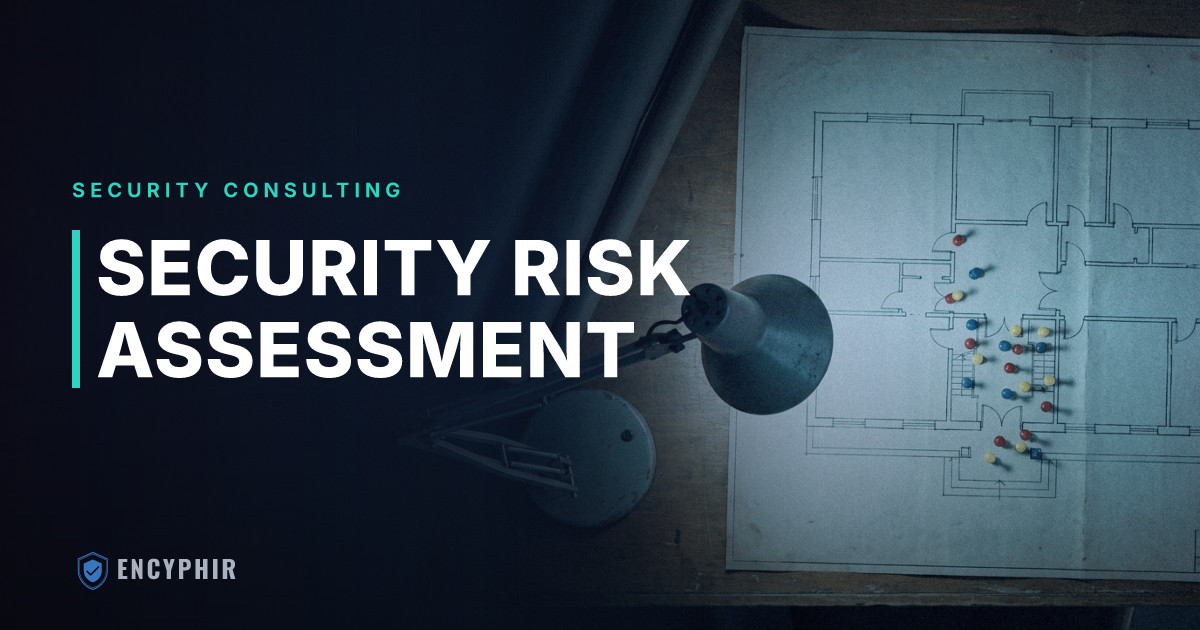
A security risk assessment is the structured process of identifying what an organization needs to protect, what threats it faces, what vulnerabilities exist, and what a security failure would cost. The output is a prioritized picture of security risk. It forms the foundation for every security investment decision the organization makes.
This article explains the methodology behind a rigorous security risk assessment and how organizations can approach one effectively.
Step 1: Define the Scope
Start by defining what the assessment covers. Security risk can apply to physical facilities, information systems, personnel, operations, supply chains, and more. A well-scoped assessment is focused enough to be actionable. An assessment that tries to cover everything at once often produces results that are too broad to be useful.
For most organizations beginning a formal security assessment process, a good starting point is the physical environment and personnel security. This is the foundational layer from which everything else builds. Assessments of digital infrastructure, supply chain risk, and operational security can follow.
Define which facilities, which assets, and which people are in scope. Document the geographic and organizational boundaries of the assessment. Make sure leadership has endorsed the scope and will support access to the information and personnel the assessment requires.
Step 2: Identify Assets Worth Protecting
What does the organization need to protect? This includes:
- Physical assets: facilities, equipment, vehicles, cash, inventory
- Information assets: proprietary data, client information, intellectual property, financial records
- People: employees, contractors, visitors, customers
- Operational continuity: the ability to continue functioning if a security event occurs
- Reputation: the organization's standing with clients, partners, and the public
Knowing what is most valuable helps focus the assessment on the assets where a security failure would have the biggest impact.
Step 3: Identify Threats
A threat is any actor or event that could harm a protected asset. Threat identification should be grounded in the actual threat environment the organization faces, not a generic catalog of every conceivable bad outcome.
Common threat categories for organizations include:
- Criminal threats: theft, burglary, robbery, vandalism, fraud
- Insider threats: employees or contractors who misuse access
- Targeted violence: workplace violence, targeted attacks by individuals with grievances
- Environmental threats: fire, natural disaster, infrastructure failure
- Reputational threats: incidents that expose the organization to public criticism
For each threat category, assess how likely the threat is for this organization, in this location, at this time.
Step 4: Identify Vulnerabilities
A vulnerability is a weakness that a threat could exploit to cause harm. This is where a physical site visit, document review, and personnel interviews become essential. Vulnerabilities are not hypothetical; they are specific gaps in the organization's current security posture.
Common vulnerabilities include:
- Inadequate access control at facility entrances
- Surveillance camera blind spots or non-functional equipment
- Policies that exist on paper but are not followed in practice
- Inadequate screening of employees, contractors, or visitors
- No formal incident reporting mechanism
- Emergency response plans that have not been tested
Document vulnerabilities specifically and concretely. "Access control is inadequate" is not a useful finding. "The loading dock door is propped open during business hours and there is no camera coverage of that entrance" is.
Step 5: Assess Consequences
For each vulnerability, assess what would happen if a threat successfully exploited it. Consequences may include:
- Physical harm to people
- Financial loss (theft, fraud, business interruption)
- Regulatory sanctions or legal liability
- Reputational damage
- Loss of sensitive information
Consequence assessment helps prioritize findings. A vulnerability that could harm employees is more urgent than one that could result in minor property theft, even if the latter is more likely.
Step 6: Prioritize and Recommend
The output of a security risk assessment is not a list of problems. It is a prioritized set of recommendations the organization can actually implement. Good recommendations are:
- Specific about what needs to change
- Realistic given the organization's resources and operational constraints
- Prioritized by risk level so the most important items are addressed first
- Accompanied by an estimated implementation complexity or cost range
Gathering Information During the Assessment
The quality of a risk assessment is tied directly to the quality of information the assessor collects. A rigorous assessment draws on multiple, independent sources rather than a single walkthrough or a self-reported questionnaire. Expect to combine document review, physical observation, personnel interviews, and, where appropriate, technical testing.
Document review typically includes:
- Existing security policies
- Post orders for any contract security personnel
- Incident logs from the past two to three years
- Access control records and visitor logs
- Emergency response plans
- Insurance requirements
Patterns in incident logs often reveal vulnerabilities that no one has articulated out loud. If the facility has logged repeated after-hours trespassing attempts at the same door, that is not a hypothesis. It is a documented pattern.
Physical observation should occur at different times of day and different days of the week. A facility that appears well-secured during a Tuesday morning tour may look very different at shift change, during a delivery window, or on a Saturday when only a skeleton crew is on site. Observe how doors are actually used, not how the policy says they should be used. Note whether badges are checked, whether tailgating occurs, whether deliveries are verified, and whether after-hours access controls work as designed.
Personnel interviews should cut across hierarchy. Executives usually describe the security program as it was designed. Line employees, receptionists, maintenance staff, and security officers describe it as it actually operates. Both perspectives matter. Front-line employees often know exactly where the weak points are, and they are usually the first to notice when something unusual is happening on site.
Industry-Specific Considerations
Different industries face different threat profiles, and a competent assessment reflects that reality. Law firms, for example, face insider risk, physical intrusion risk targeting case files and client information, and targeted threats from parties to contentious litigation. An assessment for a firm handling high-conflict matters looks different from one for a transactional practice. Our work with law firm clients often pairs facility-focused security assessment with threat assessment on specific individuals who have made statements of concern.
Corporate environments raise their own questions. Manufacturing and distribution facilities need to account for loading docks, contractor access, and supply chain exposure. Office environments in multi-tenant buildings inherit the security posture of the building landlord, which is rarely as strong as tenants assume. Corporate assessments often intersect with executive misconduct concerns and internal investigations, where physical and information security overlap with personnel risk. When the assessment surfaces indicators of financial irregularity or fraud, it may warrant parallel engagement with a Certified Fraud Examiner to evaluate financial controls alongside the physical security review.
Schools and educational institutions face public-access challenges that most commercial facilities do not. Visitor management, emergency lockdown procedures, exterior perimeter control, and communication with first responders all carry weight. Higher-risk scenarios, including threats originating from outside the district, may call for specialized investigative support that extends beyond the assessment itself.
Healthcare facilities, houses of worship, and nonprofit organizations each carry their own patterns. The common thread is that a generic checklist imported from another sector will miss what matters most. Grounding the assessment in the actual operating environment, the actual people who work there, and the actual threats the organization faces is what separates a useful assessment from a compliance exercise.
Common Mistakes Organizations Make
A few recurring mistakes undermine risk assessments across industries. The first is confusing compliance with security. Meeting a regulatory minimum, such as a camera requirement or a written policy standard, does not mean the organization is actually secure. Compliance is a floor, not a ceiling.
The second is over-reliance on technology. Cameras, access control systems, and alarm panels are tools, not solutions. An unmonitored camera, a propped door, or an alarm that routinely generates false alarms and is ignored provides the appearance of security without the substance. The assessment should evaluate whether security technology is actually being used as intended.
The third is treating the assessment as a one-time event. Threat environments change. Personnel change. Facilities are renovated, leased, or repurposed. Business lines are acquired or divested. A risk assessment conducted three years ago may not reflect the organization as it exists today. Most organizations benefit from a full reassessment every two to three years, with lighter interim reviews when significant changes occur.
The fourth is writing recommendations that cannot be executed. Recommendations that ignore budget, staffing reality, or operational constraints end up as shelfware. The best assessments include a range of options at different investment levels, so leadership can make informed tradeoffs rather than facing a binary accept-or-reject decision.
Translating Findings Into Capability
A written report is the beginning of the work, not the end. Findings need to be translated into policy updates, training, drills, technology investments, and accountability. Organizations that treat the assessment as the deliverable tend to see the same findings reappear in the next assessment cycle. Organizations that treat it as a starting point make measurable progress.
Training is often the highest-leverage follow-on investment. Employees trained to recognize suspicious behavior, respond to an intrusion, de-escalate a hostile visitor, or execute a lockdown add capability that no technology can replicate. Our security and safety training programs are designed to pair directly with assessment findings, so the topics covered reflect the specific gaps the assessment surfaced.
Working With a Security Consultant
Most organizations benefit from working with an experienced security consultant for formal risk assessments, particularly for the site evaluation, vulnerability identification, and report development phases. A consultant brings trained observation, analytical frameworks, and familiarity with security standards that most organizations do not develop internally.
Our security risk assessment services are conducted by professionals with direct law enforcement and government security experience. Corporate clients pair the assessment with our training team on workplace-violence prevention, emergency response, and de-escalation so the findings get translated into actual capability rather than a binder on a shelf. We deliver honest, prioritized findings, not a checklist designed to generate follow-on work. Schedule a consultation to discuss your assessment needs.