Insurance Fraud Investigations: An Overview of the Process
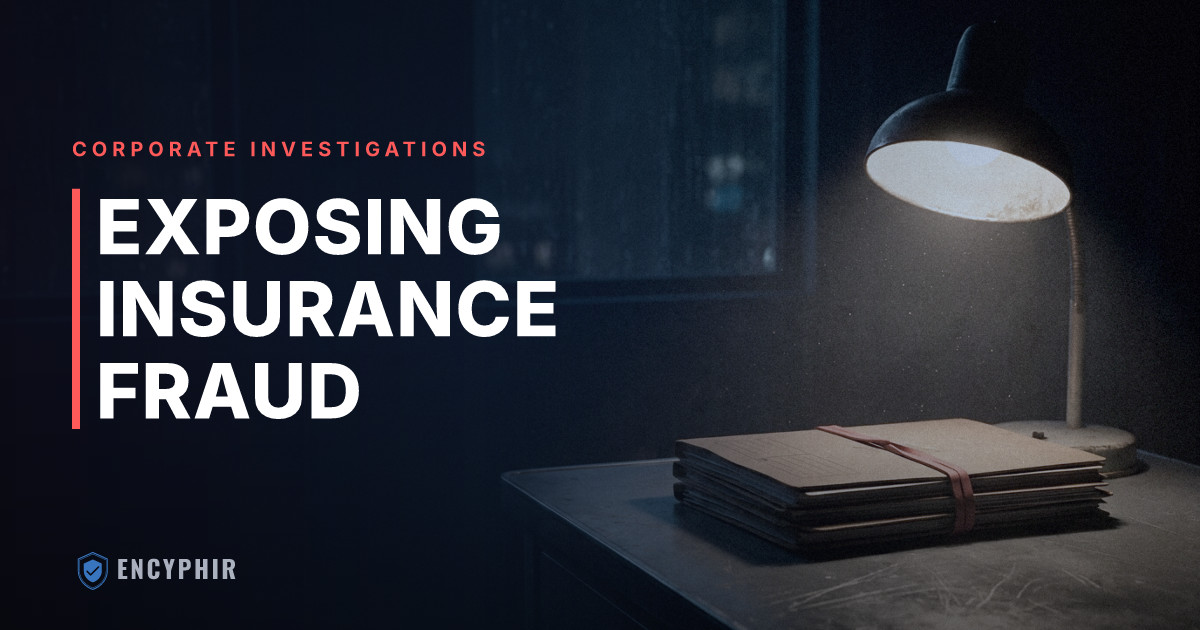
Insurance fraud is one of the most expensive white-collar crimes in the world, costing insurers, employers, and policyholders tens of billions of dollars every year. From staged accidents and inflated claims to fabricated injuries and organized fraud rings, the tactics used by bad actors continue to evolve. For carriers, self-insured employers, and defense counsel, a well-executed investigation is often the difference between paying a fraudulent claim and successfully denying, defending, or prosecuting it.
At Encyphir, we work with insurers, third-party administrators, and law firms to uncover the facts behind suspicious claims. Below, we walk through how a professional insurance fraud investigation is structured, what tools investigators use, and how businesses can protect themselves from being victimized.
Recognizing the Red Flags of a Suspicious Claim
Every investigation begins with a trigger, typically a claim that raises concerns during the intake or adjustment process. Common red flags include:
- Injuries or damages inconsistent with the reported incident
- Claimants with a history of prior similar claims
- Late reporting of losses without a reasonable explanation
- Witnesses who are difficult to locate or refuse to cooperate
- Medical treatment patterns that suggest overtreatment or provider collusion
- Financial distress leading up to a property loss or theft claim
Adjusters and Special Investigations Units (SIUs) are trained to spot these indicators, but once a case is escalated, a licensed investigator takes over to gather admissible, court-ready evidence.
Building the Investigative Plan
Once a case is referred, the investigator reviews the claim file, recorded statements, medical records, police reports, and any prior claim history. This initial analysis shapes the investigative strategy. A workers' compensation claim involving alleged permanent disability, for example, will require a very different approach than a suspected arson or a staged auto collision.
A solid investigative plan typically identifies:
- The specific elements of fraud that need to be proven or disproven
- The subjects, witnesses, and businesses involved
- The legal boundaries in the jurisdiction where the investigation will occur
- The evidence-gathering methods that will produce the strongest results
For complex commercial claims, this stage may also involve corporate investigation support to examine the business practices, ownership structures, or executive conduct connected to the loss.
Core Investigative Techniques
Modern insurance fraud investigations rely on a blend of traditional fieldwork and advanced technology. The most effective cases combine multiple approaches to build a complete picture.
Surveillance. Physical and video surveillance remains one of the most powerful tools in disability, workers' compensation, and bodily injury claims. Documenting a claimant performing activities inconsistent with their reported limitations can be decisive. Learn more about our surveillance capabilities and how they are deployed in claim investigations.
Background and asset checks. Comprehensive background investigations reveal prior claims history, criminal records, business affiliations, litigation patterns, and lifestyle inconsistencies that may point to fraud.
Digital forensics. When claims involve business interruption, cyber losses, inventory theft, or suspected document fabrication, digital forensics can recover deleted files, verify metadata, analyze communications, and authenticate electronic records.
Recorded interviews and statements. Skilled interviewing of claimants, witnesses, and providers often uncovers inconsistencies that written records alone will not reveal.
Social media and open-source intelligence. Public posts, geotagged photos, and online activity frequently contradict claimed injuries, whereabouts, or business losses.
Documenting Findings for Legal and Claims Use
Evidence is only as valuable as the way it is documented. Every surveillance log, photograph, interview transcript, and forensic report must be preserved with clear chain-of-custody records. Investigators produce detailed reports that carriers can use to support claim denials, negotiate settlements, or refer the matter for criminal prosecution.
When litigation is anticipated, coordination with defense counsel is critical. Our team frequently partners with attorneys to ensure evidence is gathered in a manner that will withstand scrutiny in court and comply with all applicable privacy and licensing laws.
Preventing Fraud Before It Happens
While investigations address fraud after it occurs, businesses can significantly reduce exposure through proactive risk management. This includes vetting vendors and contractors, screening new hires, training claims staff to identify red flags, and implementing internal controls that make fraud harder to conceal. Employers who invest in prevention typically see fewer suspect claims and lower overall loss ratios.
Partner with Encyphir on Your Next Investigation
Insurance fraud is sophisticated, but so are the tools and techniques available to fight it. Whether you are an SIU manager reviewing a suspicious first-party claim, a self-insured employer confronting a questionable workers' compensation case, or defense counsel preparing for trial, Encyphir's licensed investigators deliver the evidence you need.
Contact Encyphir today to discuss how our investigative team can support your next claim review, litigation matter, or fraud prevention program. The sooner the facts are in hand, the better positioned you are to protect your bottom line.