Multi-State Private Investigations: What Businesses Need to Know About Licensing and Reciprocity
 May 6, 2026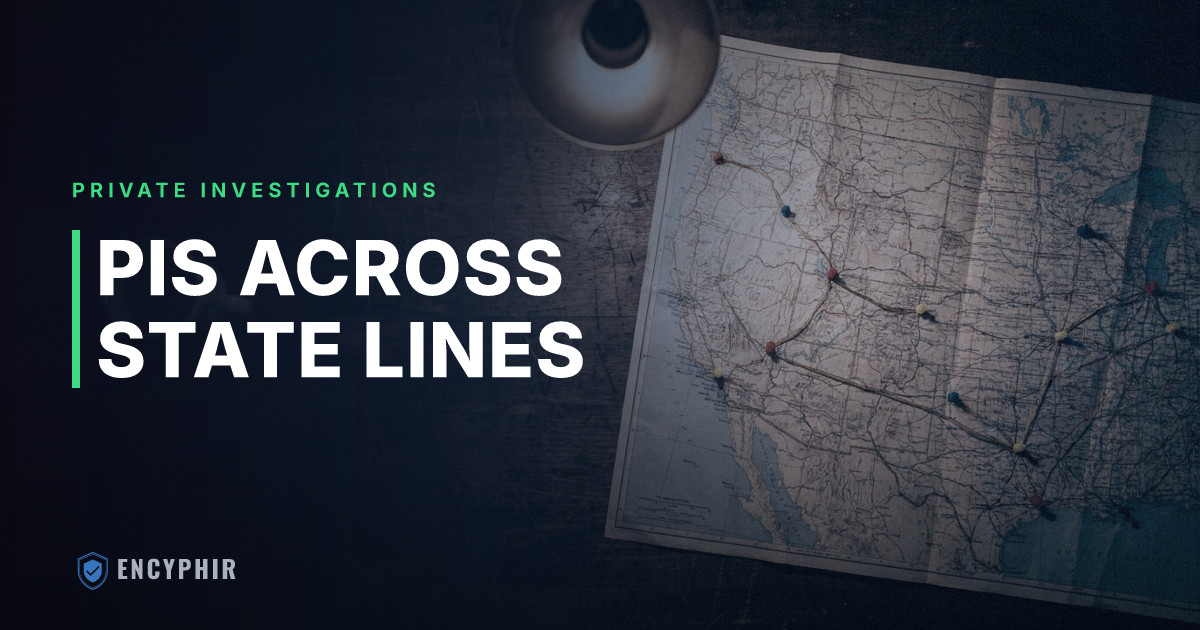
When a corporate matter crosses state lines, the investigation must follow. A fraud scheme rarely confines itself to one jurisdiction, a missing executive may flee to another state, and digital evidence often resides on servers thousands of miles from the home office. For businesses navigating these realities, understanding how licensed private investigators operate across state borders is essential. Hiring the wrong investigator, or one who lacks proper authority in a given state, can compromise evidence, expose your company to liability, and derail litigation before it begins.
At Encyphir Risk Management, we routinely conduct investigations that span multiple jurisdictions. Here is what every business client should understand about licensing, reciprocity, and the legal framework that governs multi-state investigative work.
The Patchwork of State Licensing Laws
Private investigation in the United States is regulated almost exclusively at the state level. There is no federal license for private investigators, and each state sets its own rules regarding who may conduct investigative work, what training is required, and what activities a licensee may perform. Some states, such as California, Texas, and New York, maintain rigorous licensing regimes with extensive experience requirements, examinations, and continuing education obligations. Others, including Idaho, Mississippi, and Wyoming, have minimal or no statewide licensing requirements at all.
This patchwork creates real complications. An investigator licensed in one state cannot simply pack a bag, drive across the border, and begin conducting surveillance or interviews. Doing so without proper authority can constitute a misdemeanor or even a felony in some jurisdictions, and any evidence collected may be ruled inadmissible in court.
Reciprocity Agreements and Their Limits
A handful of states have entered into reciprocity agreements that allow licensed investigators to work across borders under specific conditions. For example, Florida, Georgia, Louisiana, North Carolina, Tennessee, and Virginia maintain reciprocity arrangements that permit licensed PIs from partner states to conduct limited investigative work without obtaining a separate license. Texas and Oklahoma have a similar understanding, as do California and Nevada in certain circumstances.
However, reciprocity is rarely absolute. Most agreements impose conditions: the investigator must notify the host state's licensing board, the case must originate in the investigator's home state, and the work must be temporary in nature. Some agreements only cover specific activities, such as serving subpoenas or interviewing witnesses, while excluding surveillance and vehicle tracking operations.
For businesses, the practical takeaway is clear: assume nothing about an investigator's authority to operate in a given state, and ask for documentation.
How Professional Firms Handle Multi-State Cases
Reputable investigative firms have several strategies for handling cases that cross state lines lawfully and effectively. The first is maintaining licenses in multiple states. Firms that regularly work in defined regions often hold active licenses in each state where they operate, eliminating any ambiguity about authority.
The second is partnering with licensed investigators in other jurisdictions. Established firms cultivate networks of trusted, vetted PIs who can be retained to conduct on-the-ground work in their home states. This approach preserves legal compliance and often produces better results, since local investigators know the courts, the geography, and the people.
The third strategy involves leveraging investigative work that does not require a physical presence. Much of modern investigation, including digital forensics and cybercrime analysis, open-source intelligence gathering, and certain types of background investigations and pre-employment screening, can be conducted remotely from a properly licensed office, regardless of where the subject resides.
Why This Matters for Corporate Clients
When your company hires an investigator for a sensitive matter, the stakes extend far beyond the investigative outcome. Improperly obtained evidence can be excluded at trial, exposing your legal strategy. Unlicensed activity can trigger civil liability, regulatory scrutiny, and reputational harm. In matters involving executive misconduct, fraud, or due diligence, the chain of custody and the legal authority of every investigator involved will be tested.
Before engaging any investigative firm, ask the following questions: In which states are you licensed? How will you handle work that occurs outside those jurisdictions? Do you maintain partnerships with licensed investigators elsewhere? Can you provide proof of insurance and licensure in every state involved in our matter?
Choose a Firm That Operates Lawfully Everywhere It Works
Multi-state investigations demand experience, infrastructure, and a deep respect for the legal frameworks that govern this profession. Cutting corners on licensing is not a minor administrative oversight; it is a risk that can unravel an entire case.
Encyphir Risk Management conducts investigations across jurisdictions with full compliance, transparent documentation, and proven results. If your organization is facing a matter that may cross state lines, contact our team today to discuss how we can support your objectives lawfully and effectively.