Payroll Fraud Schemes: How Certified Fraud Examiners Catch the Culprits
 July 10, 2026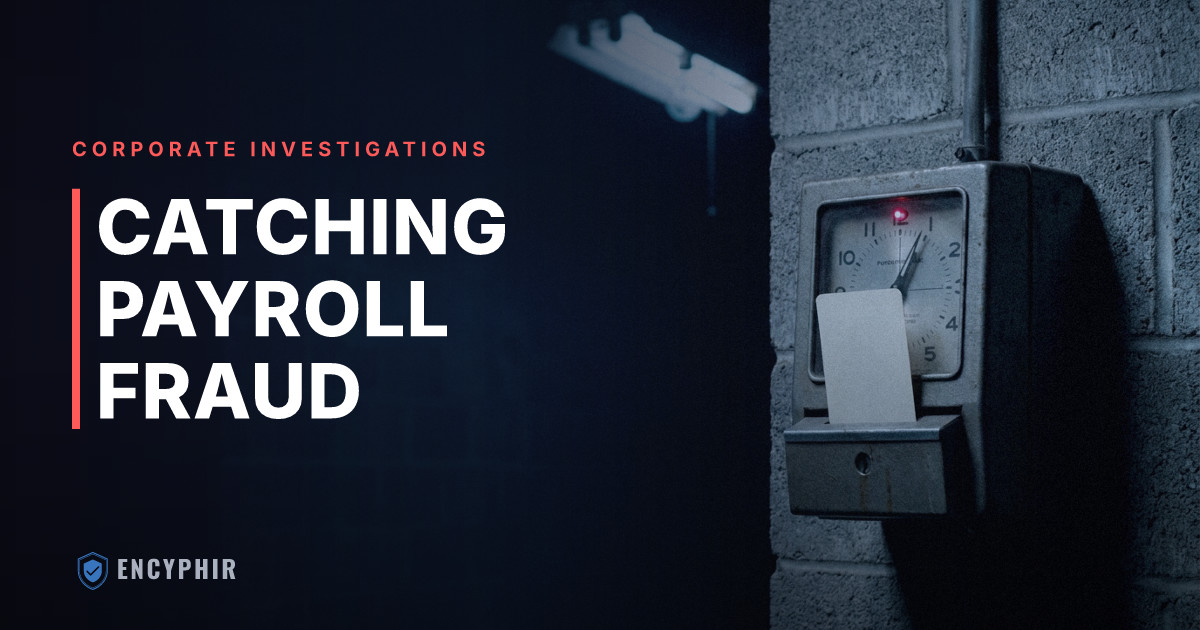
Payroll fraud is one of the most persistent and costly forms of occupational fraud facing businesses today. According to the Association of Certified Fraud Examiners (ACFE), payroll schemes have a median duration of nearly two years before detection, and the average loss can reach into the six figures. What makes payroll fraud particularly dangerous is that it often hides in plain sight, buried in routine transactions that appear entirely legitimate. For business owners, HR leaders, and CFOs, understanding how these schemes operate, and how trained investigators uncover them, is essential to protecting the bottom line.
At Encyphir Risk Management, our Certified Fraud Examiners (CFEs) work alongside forensic accountants and licensed investigators to identify, document, and resolve payroll fraud in organizations of all sizes. Below, we break down the most common payroll fraud schemes and the methods professionals use to catch them.
The Most Common Payroll Fraud Schemes
Payroll fraud typically falls into several recognizable categories, each exploiting a different weakness in the payroll process.
Ghost employee schemes occur when a fictitious employee is added to the payroll, or when a former employee's record is kept active after their departure. Paychecks are then routed to an account controlled by the fraudster, often someone in HR or payroll with the authority to add or modify employee records.
Falsified hours and overtime is one of the most frequent schemes, particularly in hourly workforces. Employees inflate the number of hours worked, claim unearned overtime, or engage in "buddy punching," where coworkers clock in for absent colleagues.
Commission and bonus manipulation involves sales staff or managers inflating sales figures, backdating transactions, or falsifying customer records to trigger higher commission payouts.
Misclassification schemes happen when workers are intentionally misclassified, such as listing an employee as exempt to avoid overtime obligations, or classifying a related party as a contractor to conceal payments.
Expense reimbursement fraud, while technically adjacent to payroll, frequently rides alongside these schemes. Fictitious receipts, duplicate submissions, and inflated mileage claims can quietly drain thousands of dollars per year.
Red Flags Every Employer Should Watch For
Certified Fraud Examiners are trained to look for anomalies in data patterns, but many red flags can be spotted internally with the right awareness. Common warning signs include:
- Employees who never take vacation or refuse to let others handle payroll functions
- Duplicate direct deposit accounts across multiple employee records
- Payroll totals that consistently exceed budget without corresponding headcount growth
- Overtime concentrated among a small group of employees
- Terminated employees who remain on active payroll registers
- Manual adjustments or off-cycle checks issued without clear documentation
When these indicators appear, it is time to bring in a professional. Attempting to confront a suspected fraudster internally, without evidence, can compromise the investigation and expose the company to wrongful termination claims.
How Certified Fraud Examiners Uncover the Truth
CFEs combine investigative expertise with forensic analytics to build airtight cases. A typical corporate fraud investigation begins with data acquisition: payroll registers, timekeeping records, direct deposit files, tax documents, and HR change logs are collected and preserved in a forensically sound manner.
Investigators then apply analytical techniques such as Benford's Law analysis, duplicate payment testing, and cross-referencing bank account numbers across employee records to identify anomalies. Ghost employees, for example, often share addresses, phone numbers, or bank accounts with legitimate staff members, a pattern that data analytics quickly reveals.
When digital evidence is involved, our digital forensics team recovers deleted files, examines email correspondence, and traces system access logs to establish who made changes to payroll records and when. This technical evidence is often the linchpin of a successful prosecution or civil recovery action.
Interviews are the final piece. CFEs are trained in structured interview techniques that elicit admissions while protecting the rights of all parties involved.
Prevention Starts Before Fraud Occurs
The best defense against payroll fraud is a proactive one. Strong internal controls, segregation of duties, mandatory vacation policies, and periodic payroll audits significantly reduce opportunity. Equally important is thorough pre-employment screening for anyone with access to financial systems. A comprehensive background check can reveal prior terminations for cause, undisclosed criminal history, or financial pressures that increase fraud risk.
Companies should also consider periodic third-party payroll reviews. An outside set of expert eyes often catches what internal teams have grown accustomed to overlooking.
Protect Your Payroll, Protect Your Business
Payroll fraud rarely announces itself. It builds slowly, hidden within the routine rhythm of pay cycles, until the losses become impossible to ignore. If you suspect irregularities in your payroll, or simply want to strengthen your controls before a problem emerges, Encyphir Risk Management is ready to help. Our Certified Fraud Examiners, licensed investigators, and forensic specialists deliver discreet, defensible results.
Contact Encyphir today to schedule a confidential consultation and take the first step toward safeguarding your organization.