Surveillance Types: Stationary, Mobile, Drone, and Team Operations
 April 6, 2026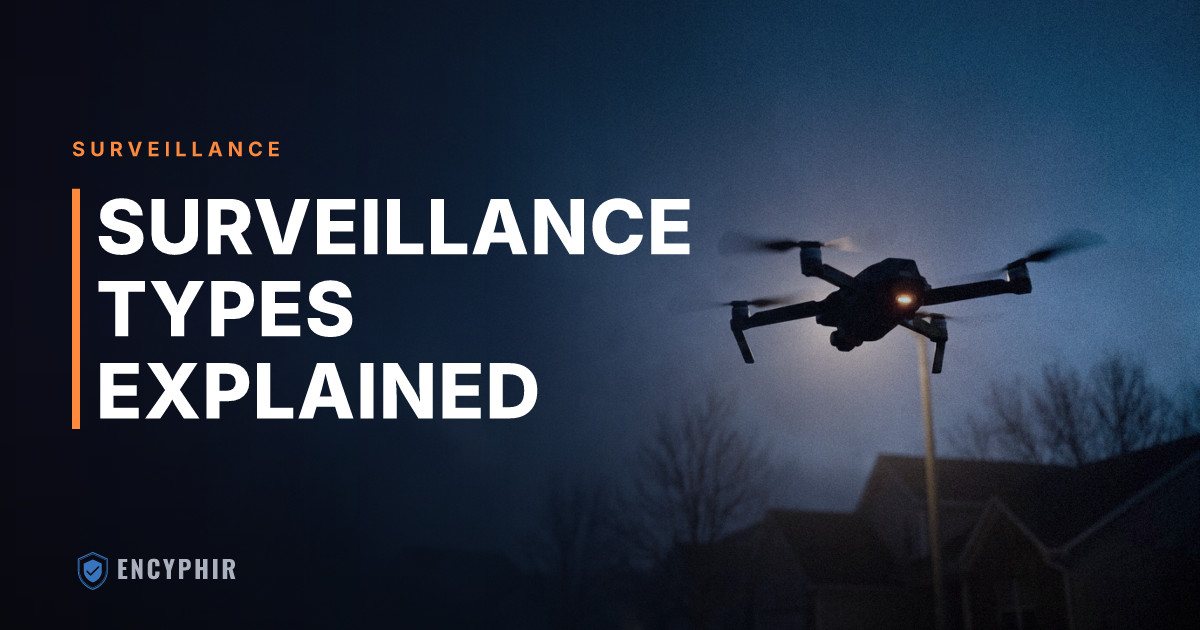
Insurance surveillance takes many forms. The right setup depends on the subject, the environment, and the evidentiary question. Matching the surveillance type to the claim is a core skill of a senior field investigator.
Stationary Surveillance
Stationary surveillance is fixed-position observation from a single vantage point. That usually means a vehicle parked within sightline of the subject's residence, workplace, or other known location. It's the default for:
- Residence-based surveillance where the subject's daily pattern is observable
- Workplace surveillance (where legal access permits)
- Medical facility surveillance (outside only)
- Apartment complexes and gated communities with limited access points
Stationary surveillance is most efficient when the subject's schedule is predictable and the position offers meaningful sightlines. One investigator, one vehicle, a full day of observation.
Mobile Surveillance
Mobile surveillance follows a subject through driving, walking, or public-transit movement. Use it when:
- The subject travels to variable locations (medical, work, errands, social)
- The case question is about activity away from the residence (side jobs, travel inconsistent with claim)
- The subject's schedule is not predictable
Single-investigator mobile surveillance is demanding. Losing a subject in traffic is common. Multi-investigator mobile surveillance, covered below, is often warranted on cases that justify the cost.
Foot Surveillance
Less common, but still necessary in urban environments where the subject walks extensively. Think shopping centers, downtown corridors, gyms, and event venues. Foot surveillance requires particular care about counter-detection. Investigators have to blend into the environment.
Multi-Investigator / Team Surveillance
For subjects that cannot be reliably covered by a single investigator, team surveillance puts two or more investigators on the case at once. Typical configurations:
- Two-vehicle mobile: standard for subjects who drive through traffic or who live in high-visibility environments
- Stationary + mobile hybrid: one investigator maintains the residence, another follows when the subject leaves
- Multi-day rotating team: long-duration surveillance where investigator fatigue is a risk
Team surveillance costs more per hour. It is often significantly more productive per day.
Drone and Aerial Surveillance
Drone (UAS) surveillance has become a legitimate insurance investigation tool for specific scenarios:
- Overhead documentation of a subject's property where lawful (compliant with FAA and state drone rules)
- Scene documentation for property insurance claims: roof condition, debris patterns, construction site overview
- Event or activity documentation from public airspace
Drone surveillance is tightly constrained by law. Residential overflights, altitude restrictions, and reasonable-expectation-of-privacy rules all apply. Many states specifically regulate drone use for private investigation. Consult a licensed investigator familiar with your jurisdiction before planning drone work.
GPS and Vehicle Tracking
GPS tracking of vehicles is legal in some contexts and illegal in others. It depends on state law and vehicle ownership. In most states, placing a GPS tracker on a vehicle the investigator or client does not own is illegal. California, in particular, has strict rules. Our surveillance privacy laws post covers the state-by-state framework.
Where GPS is lawfully available, typically on insurance-owned or fleet vehicles, it can dramatically increase the efficiency of mobile surveillance.
Covert Camera Configurations
Beyond handheld and dash-mounted cameras, modern surveillance uses:
- Long-lens (telephoto) cameras for distance observation
- Covert body-worn cameras
- Vehicle-concealed camera systems
- Low-light and thermal imaging where legally permissible
- HD and 4K video for evidentiary clarity
Every configuration has to support chain-of-custody preservation. See admissible surveillance video.
Short-Term vs. Long-Term Surveillance
- Spot surveillance: targeted short sessions around known events (IME, deposition, known work schedule)
- Single-day: the workhorse of workers' comp and disability surveillance
- Multi-day: coverage across variable days to capture pattern activity
- Extended: long-duration surveillance for high-reserve or litigated cases
Our when-to-order surveillance post and activity check comparison cover how to pick duration.
Matching the Type to the Claim
The right surveillance type is the cheapest one that will answer the evidentiary question. For most workers' comp claims with a predictable residence-based schedule, single-investigator stationary-to-mobile is the default. Complex cases earn the cost of team surveillance quickly. That includes multi-vehicle households, variable schedules, gated communities, and suspicious light-duty compliance.
Our surveillance and activity check services scope the right configuration for each referral and adjust as the subject's pattern becomes clearer.