What Is Forensic Accounting? A Complete Guide
 October 1, 2024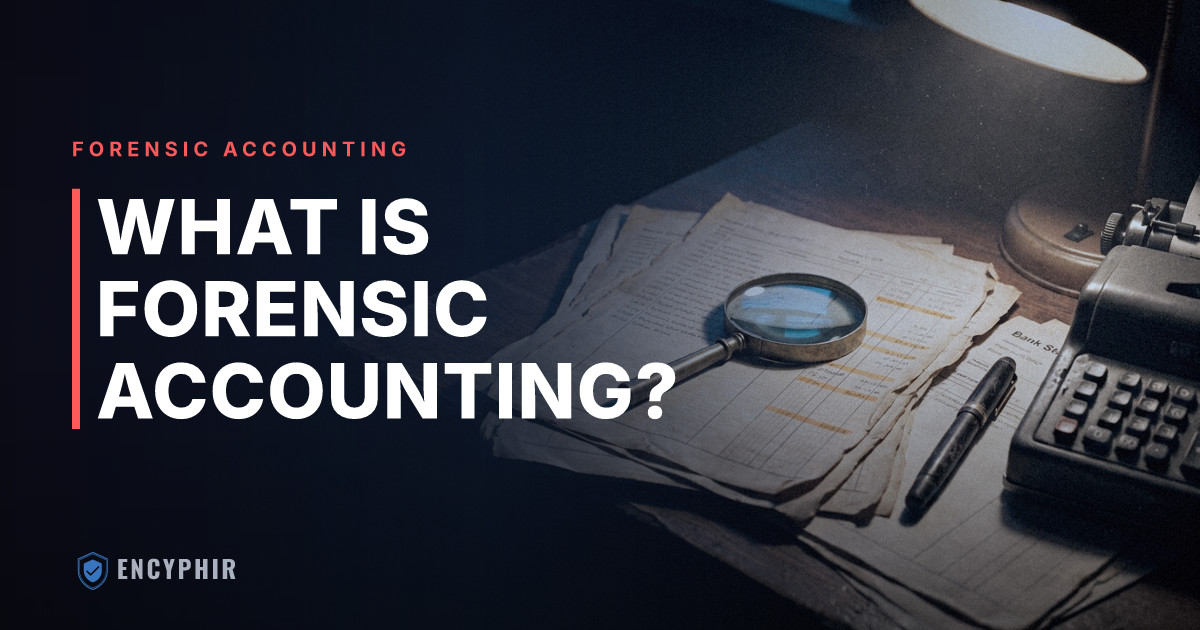
Forensic accounting sits at the intersection of accounting, auditing, and investigation. It applies financial expertise to legal questions, producing analysis that holds up in court and in regulatory proceedings. It is a highly specialized discipline within the accounting profession. Demand for it has grown steadily as financial fraud has grown in scope and complexity.
What Forensic Accounting Actually Is
The word "forensic" comes from the Latin for "of the forum," meaning matters suited for public debate, particularly legal proceedings. Forensic accounting is accounting performed for legal purposes. That includes investigations, litigation support, fraud examinations, valuation disputes, and regulatory compliance matters.
A forensic accountant does not simply review financial records. They analyze them with a specific question in mind: has fraud occurred, how did it occur, who committed it, and how much was taken? The methods are grounded in standard accounting and auditing practice. The output, however, is designed to answer legal questions and survive legal scrutiny.
What Forensic Accountants Do
The work varies by engagement type, but the core activities include:
Fraud investigation. Examining financial records, internal controls, and transaction histories to determine whether fraud occurred, identify the mechanism, quantify the loss, and identify responsible parties. This is the core of most forensic accounting engagements.
Litigation support. Providing analysis, written reports, and expert testimony in civil and criminal proceedings. When financial disputes reach litigation, forensic accountants help attorneys and courts understand complex financial matters. This includes damages calculations, business valuations in divorce proceedings, and financial analysis in breach-of-contract cases.
Financial statement analysis. Reviewing financial statements for signs of manipulation, misrepresentation, or fraud. This is particularly relevant in securities fraud investigations and regulatory enforcement actions.
Asset tracing. Following money through complex transaction chains, shell companies, and multiple jurisdictions to locate hidden or misappropriated assets. This is a critical tool in embezzlement investigations, divorce proceedings involving hidden assets, and bankruptcy fraud matters.
Expert testimony. Providing court testimony that translates complex financial analysis into terms a judge or jury can understand and rely upon.
How Forensic Accounting Differs From Regular Accounting
Standard accounting produces financial records and reports for business management and external stakeholders. The goal is accurate representation of financial position and performance. A standard auditor issues opinions on whether financial statements comply with accounting standards. They are not looking for fraud as a primary objective.
Forensic accounting starts from a different premise. The forensic accountant assumes something may be wrong and applies investigative skepticism to the entire financial record. They look for patterns, anomalies, and inconsistencies that suggest manipulation. They work backward from a question, tracing transactions and following money to answer it.
The outputs are also different. A standard audit produces an audit opinion. A forensic engagement produces an investigative report, a damages calculation, an asset trace, or expert testimony. Each is formatted to meet the requirements of legal proceedings.
When You Need a Forensic Accountant
Suspected employee fraud. If you believe an employee, officer, or vendor is stealing from your organization, a forensic accountant can quantify the loss, document the mechanism, and produce evidence suitable for termination proceedings, civil litigation, and criminal referral.
Business disputes and litigation. Disputes over business valuations, lost profits, breach of contract damages, and partnership dissolutions frequently require forensic financial analysis to resolve.
Divorce proceedings. When significant assets or business interests are involved in a divorce, a forensic accountant can find hidden assets, value businesses accurately, and identify financial misconduct that affects the equitable distribution analysis.
Regulatory investigations. Companies under investigation by the SEC, IRS, or other regulators benefit from forensic accounting support that allows them to understand and respond to financial allegations.
Insurance claims. Complex insurance claims, particularly business interruption claims, often require forensic accounting to calculate and support the loss amount.
The CFE Credential
The Certified Fraud Examiner (CFE) designation, issued by the Association of Certified Fraud Examiners (ACFE), is the most widely recognized credential in fraud investigation. CFEs are trained specifically in fraud detection, prevention, and deterrence across financial transactions, law, investigation technique, and fraud deterrence. When a forensic accounting engagement involves fraud, a CFE brings focused expertise that goes beyond standard accounting training.
Our CFE-credentialed investigators combine forensic accounting expertise with investigative methodology to produce findings that are both technically sound and legally defensible.
Common Fraud Schemes a Forensic Accountant Uncovers
Fraud tends to follow recognizable patterns, and experienced forensic accountants know what to look for. Asset misappropriation is the most common category. It includes skimming, where cash is taken before it is recorded, and larceny, where funds are taken after being recorded. Billing schemes involve fictitious vendors, inflated invoices, or purchases diverted to personal use. Payroll schemes include ghost employees, falsified hours, and unauthorized commission payments.
Financial statement fraud is less frequent but far more damaging in dollar terms. Recurring themes in enforcement actions include:
- Revenue recognition manipulation
- Improper capitalization of expenses
- Off-balance-sheet liabilities
- Reserve manipulation
Corruption schemes occupy the middle ground and frequently appear alongside vendor fraud. These include bribery, kickbacks, conflicts of interest, and bid rigging.
A forensic accountant approaches each engagement with an understanding of these patterns and then tests the evidence against them. The investigation typically begins with data analytics applied to general ledger entries, vendor master files, payroll records, and expense reports. That is followed by targeted review of supporting documentation and, when appropriate, interviews of personnel with knowledge of the transactions. In matters involving senior leadership, these engagements often overlap with executive misconduct investigations, where financial irregularities sit alongside broader governance concerns.
The Forensic Accounting Process
Every engagement begins with scoping. Counsel or the client identifies the concern, the parties involved, the time period at issue, and the legal or business context. The forensic accountant then develops an investigative plan. That plan covers what data must be preserved, what records must be obtained, what analyses will be performed, and what deliverables are required. Clear scoping at the outset protects privilege and ensures the work product is admissible.
Evidence preservation comes next. Financial data, email, accounting system backups, and electronic documents must be collected in a forensically sound manner, with documented chain of custody. In matters involving electronic records, forensic accounting frequently pairs with digital forensics to capture system images, recover deleted files, and reconstruct user activity. Without defensible collection, even the most careful analysis can be challenged or excluded.
Analysis follows. The forensic accountant reconciles accounts, identifies anomalies, traces funds, compares records against third-party sources such as bank statements and tax filings, and quantifies any identified loss or damage. The resulting work product is a detailed report that lays out the scope, methodology, evidence reviewed, findings, and conclusions. That report must be written with the understanding that opposing counsel, a judge, or a jury will scrutinize every assertion.
Red Flags That Should Prompt an Investigation
Organizations rarely learn about fraud through accounting reports alone. The warning signs tend to be behavioral and operational before they become financial. An employee who refuses to take vacation, insists on handling certain accounts personally, or lives visibly beyond their means is worth noticing. Classic indicators in billing schemes include:
- Vendors with addresses matching employee addresses
- Invoices that fall just under approval thresholds
- Round-dollar payments to obscure entities
Other warning signs warrant a closer look:
- Unexplained variances in margins
- Inventory shrinkage that exceeds industry norms
- Declining cash flow alongside rising reported profits
- Frequent adjusting journal entries near period-end
Complaints from customers about payments not posted, or from vendors about payments not received, sometimes reveal diversion schemes. Anonymous tips remain the single largest source of fraud detection. Organizations that maintain confidential reporting channels identify schemes faster and at lower cost.
When any of these indicators surface, the right response is rarely a confrontation. It is a quiet, methodical investigation conducted under counsel, with evidence preserved and witnesses approached in the proper sequence. Premature action can compromise evidence, alert the subject, and expose the organization to wrongful-termination or defamation claims.
Working With Counsel and Coordinating With Other Investigative Disciplines
Forensic accounting engagements produce the best outcomes when they operate under attorney direction. Retaining the forensic accountant through counsel extends attorney work-product protection to the investigative file. That protection is particularly important when findings may later support or refute litigation claims. Our work on law firm engagements is structured with these considerations in mind, and we coordinate closely with outside counsel on scope, privilege, and reporting.
Financial investigations also benefit from integration with other investigative disciplines. Asset tracing may require surveillance to confirm the use of assets or the lifestyle of a subject. Background work on counterparties, vendors, or potential acquisition targets frequently calls for due diligence research into corporate structures, litigation history, and reputational issues. In acquisition and partnership contexts, corporate clients retain us to combine forensic accounting with broader diligence so that financial, legal, and reputational risks are evaluated together rather than in isolation.
Choosing the Right Forensic Accountant
Credentials matter, but so does judgment. Look for a practitioner who holds the CFE designation, has substantive experience in the type of matter at hand, and can articulate their methodology clearly. Ask about prior expert testimony, Daubert challenges, and the types of industries they have investigated. Communication style matters as well. A forensic accountant who cannot explain their findings plainly to a non-specialist will struggle on cross-examination and in front of a jury.
Independence and objectivity are non-negotiable. The forensic accountant must be willing to follow the evidence wherever it leads, including to conclusions the client did not expect or want. Engagement letters should define scope, compensation, and reporting obligations clearly. Compensation should never be contingent on findings.
Contact Encyphir Risk Management to discuss a forensic accounting engagement. Initial consultations are free and confidential. We will help you identify the right scope, the right methodology, and the right team for the matter in front of you.