When Internal HR Investigations Fall Short: The Case for Outside Investigators
 July 4, 2026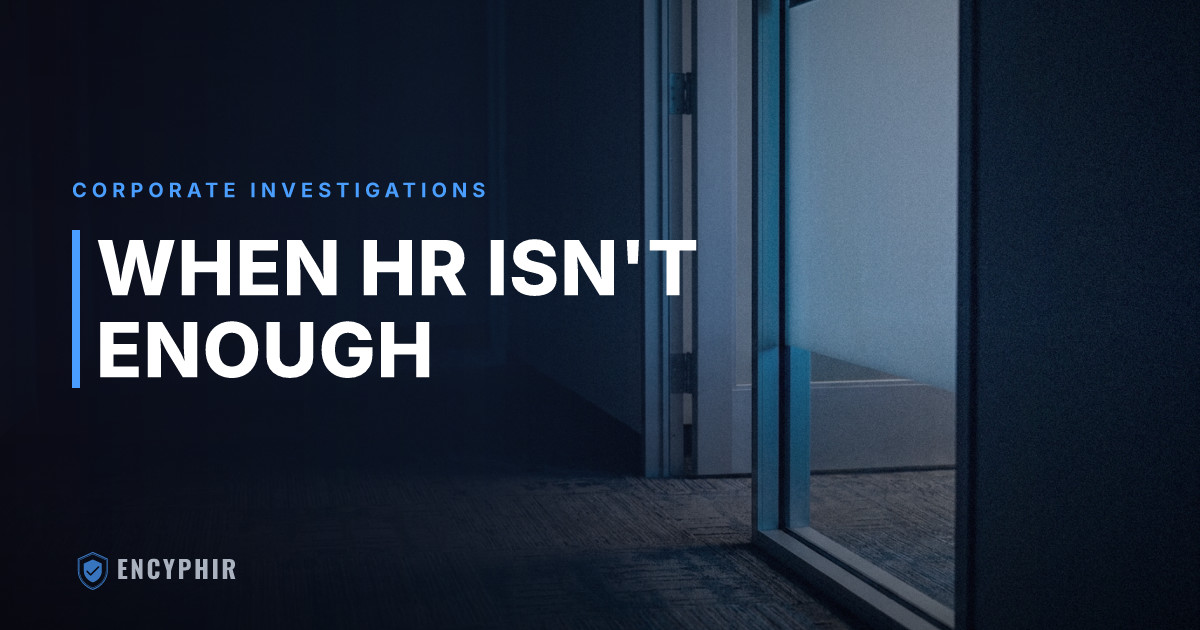
When a serious allegation lands on an HR leader's desk, whether it involves harassment, financial misconduct, discrimination, or executive wrongdoing, the instinct is often to handle it in-house. After all, HR knows the culture, the players, and the policies. But the very familiarity that makes HR effective at day-to-day people management can become a liability when an investigation demands independence, technical expertise, and legal defensibility.
Internal investigations fail more often than most executives realize. They fail quietly, through incomplete interviews, mishandled evidence, and reports that cannot withstand scrutiny in litigation. By the time the shortcomings become visible, the company is usually facing a lawsuit, a regulatory inquiry, or a public relations crisis. This post explores where internal HR investigations tend to break down and why bringing in outside investigators is often the smarter, more defensible choice.
The Hidden Limitations of Internal HR Investigations
HR professionals are trained in employee relations, compliance, and policy enforcement. They are not typically trained as investigators. Conducting a proper investigation requires a specialized skill set: structured interviewing techniques, evidence preservation, chain-of-custody protocols, and the ability to analyze digital artifacts, financial records, and behavioral patterns.
Even the most capable HR team faces structural obstacles that no amount of training can overcome:
- Conflicts of interest. HR reports to leadership, and leadership is sometimes the subject of the investigation. Even when the target is a lower-level employee, HR has ongoing relationships with witnesses that can shape, consciously or not, how questions are asked and how answers are weighed.
- Limited investigative tools. HR generally lacks access to forensic technology, surveillance capabilities, and public records databases that outside professionals use routinely.
- Perception of bias. Employees, juries, and regulators frequently view internal findings with skepticism, especially when the conclusions favor the company.
- Time and bandwidth constraints. A thorough investigation can consume hundreds of hours. HR teams juggling benefits, recruiting, and compliance simply cannot devote that kind of focus.
When Independence Becomes a Legal Necessity
Certain allegations elevate the stakes to a point where independence is no longer optional. Claims involving C-suite executives, board members, whistleblower complaints, or systemic misconduct require an investigator who has no reporting line into the organization. Regulators, plaintiffs' attorneys, and courts routinely challenge the credibility of findings produced by employees who answer to the accused.
Outside investigators bring three things that in-house teams cannot: independence, specialized expertise, and defensibility. Firms that specialize in executive misconduct and corporate investigations build cases the way litigators need them built, with documented methodology, preserved evidence, and reports designed to hold up under cross-examination.
This is particularly important in matters involving suspected fraud, self-dealing, or leadership misconduct, where the internal chain of command itself may be compromised.
Digital Evidence: Where Most Internal Investigations Break Down
Modern workplace investigations almost always involve digital evidence: emails, text messages, deleted files, cloud storage activity, USB transfers, and access logs. HR teams and even internal IT departments rarely have the training or tools to collect this evidence in a forensically sound manner. A single mishandled hard drive or improperly exported email archive can render evidence inadmissible or, worse, expose the company to spoliation claims.
Professional digital forensics work follows strict chain-of-custody procedures and uses court-accepted imaging tools. When an employee is suspected of stealing client data, sabotaging systems, or leaking confidential information, the difference between a forensically defensible investigation and a well-intentioned internal review can determine whether the company recovers damages or absorbs the loss.
The Value of Corroborating Evidence
A credible investigation is not built on interviews alone. It is built on independently verifiable facts. Outside investigators can conduct discreet surveillance when workplace claims involve off-duty conduct, workers' compensation fraud, or violations of non-compete agreements. They can develop background intelligence, verify credentials, and identify undisclosed relationships or business interests that internal teams have no practical way to uncover.
This corroborating evidence transforms an investigation from a he-said, she-said exercise into a fact-based analysis that decision-makers can act on with confidence.
Building a Smarter Investigation Strategy
Using outside investigators does not mean sidelining HR. The most effective approach treats HR as the internal coordinator and cultural liaison, while outside professionals handle the fact-finding, evidence collection, and report preparation. This division of labor protects HR's ongoing relationships with the workforce, preserves the integrity of the investigation, and produces findings that stand up to legal and regulatory scrutiny.
The cost of getting an investigation wrong, in litigation exposure, reputational harm, and lost trust, dwarfs the cost of doing it right the first time.
Protect Your Organization Before the Next Allegation Lands
If your company is facing a sensitive internal matter, or if you simply want to know that you have the right resources in place before the next one arises, Encyphir's licensed investigators are ready to help. Contact us today to discuss a confidential engagement and learn how independent investigative support can protect your people, your assets, and your reputation.