Digital Forensics Tools: What Investigators Actually Use
 March 15, 2022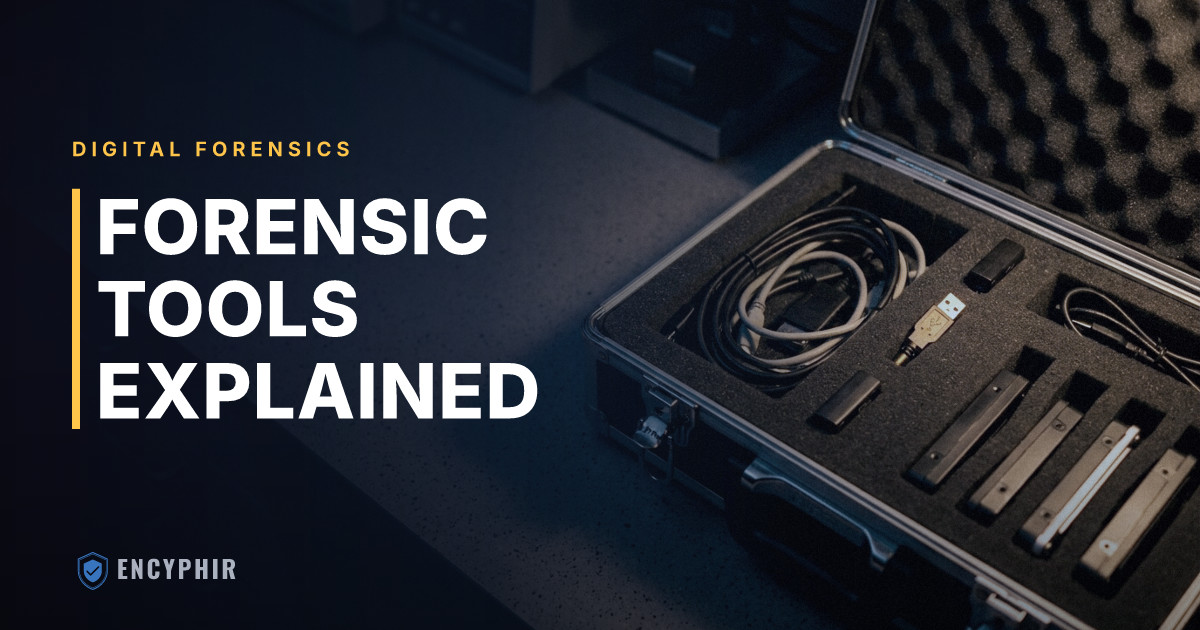
Professional digital forensics relies on a defined set of validated tools. These tools are accepted by courts and subject to regular testing and certification. Understanding the landscape of these tools is useful for anyone engaging a forensic service, evaluating forensic evidence, or working in the field.
Why Tool Validation Matters
Forensic tools used in legal proceedings must meet standards that consumer software does not. Courts expect that the tools used to recover and analyze evidence are reliable, that their methodology is documented, and that results can be reproduced.
Major forensic tools are validated by the National Institute of Standards and Technology (NIST) through its Computer Forensics Tool Testing (CFTT) program. Validated tools have documented performance characteristics, known limitations, and an established track record in legal proceedings.
Mobile Forensics Tools
Cellebrite UFED. The industry-leading platform for mobile device extraction. UFED supports thousands of device models. It can perform logical, file system, and physical extractions depending on the device and its security state. Cellebrite's analytics platform (UFED Physical Analyzer and Cellebrite Pathfinder) processes and analyzes extracted data.
MSAB XRY. A Cellebrite competitor used by law enforcement agencies and private examiners worldwide. XRY has strong support for legacy devices. It is frequently used when Cellebrite's coverage is incomplete for a specific device.
Oxygen Forensic Detective. Provides mobile device extraction with particular strength in cloud service extraction, including iCloud, Google, and third-party applications. A common complement to hardware extraction tools.
GrayKey. Used by law enforcement and select licensed private examiners to bypass passcode locks on iOS devices. Access to GrayKey is restricted and requires licensing agreements with the manufacturer (Magnet Forensics).
Computer Forensics Tools
Magnet AXIOM. A widely used computer forensics platform covering disk imaging, artifact analysis, and cloud data collection. AXIOM has extensive support for application artifacts and integrates computer, mobile, and cloud evidence.
EnCase Forensic. An original commercial forensic platform that is still widely used. EnCase is known for robust disk imaging, keyword searching, and court acceptance. It is heavily used in law enforcement and corporate investigations.
FTK (Forensic Toolkit). Developed by Exterro (formerly AccessData), FTK is known for fast processing and strong email analysis capabilities. It is a common alternative or complement to EnCase.
Autopsy. An open-source forensic platform built on The Sleuth Kit. Used by law enforcement agencies globally, including the Department of Homeland Security. Open-source tools can be appropriate in forensic contexts when properly validated and documented.
X-Ways Forensics. A powerful and efficient forensic tool, popular among advanced examiners for its speed and depth of analysis. Its interface requires significant expertise.
Imaging and Write-Blocking Hardware
Before any analysis, forensic examiners create a verified copy of the target media using hardware write blockers. These devices prevent any data from being written to the original evidence during imaging.
Tableau write blockers (now part of Guidance Software/OpenText) are among the most common hardware write blockers. They are available in configurations for SATA, IDE, USB, and other interfaces.
Wiebetech devices provide similar functionality and are widely used in both law enforcement and private forensic practices.
Imaging software including FTK Imager, Guymager, and dc3dd creates the forensic image. Each tool calculates hash values to verify that the copy is an exact replica of the original.
Network and Cloud Forensics Tools
Wireshark. The standard tool for network traffic capture and analysis. Used to examine network communications in investigations involving data exfiltration, unauthorized access, or network intrusion.
Magnet AXIOM Cloud. Retrieves data from cloud services including Google Workspace, Microsoft 365, iCloud, Dropbox, and others using account credentials or legal process.
Belkasoft Evidence Center. Provides cloud acquisition alongside traditional disk and mobile analysis.
Specialized Tools for Specific Investigation Types
Beyond the core platforms, experienced examiners maintain a toolkit of specialized utilities for particular evidence types or investigation scenarios. The right tool for a given case depends on the device, the data in question, and the legal standard that must be met.
For email and messaging analysis, tools such as Aid4Mail and Intella handle the large PST, OST, and mbox containers common in corporate matters. In a typical executive misconduct investigation, we frequently process years of Exchange archives alongside Slack and Teams exports. The ability to deduplicate, thread, and search across multiple communication platforms becomes essential. These tools also preserve metadata that simpler viewers discard, which matters when authenticity is challenged.
For memory analysis, Volatility and Rekall extract artifacts from RAM captures. These artifacts include running processes, network connections, and encryption keys that never touch the disk. Memory forensics has become increasingly important as attackers use fileless malware. It also matters when investigators encounter full-disk encryption that must be analyzed while the system is live.
For vehicle forensics, Berla iVe extracts data from infotainment and telematics systems in modern vehicles. It recovers location history, paired device lists, call logs, and event data. This has grown into a distinct discipline as vehicles now store evidence comparable to a secondary mobile device.
Artifact Analysis and What Tools Actually Recover
Clients often ask what forensic tools can actually find. The answer depends heavily on the operating system, the device configuration, and how quickly the evidence was preserved. A modern Windows workstation maintains dozens of artifact categories that trained examiners routinely parse, including:
- prefetch files showing program execution
- ShellBags recording folder access
- ShimCache and AmCache entries documenting binary execution
- Jump Lists capturing recent document activity
- USN journal records tracking file system changes
macOS produces a comparable set of artifacts through Spotlight metadata, Unified Logs, KnowledgeC databases, and FSEvents. iOS and Android both maintain extensive usage databases that can establish timelines of application use, location history, and communication activity. The depth of recovery depends significantly on whether a full file system extraction was achievable or only a logical extraction.
Understanding what exists, what is recoverable, and what has been overwritten is central to setting realistic expectations. A laptop returned by a departed employee two months after separation will typically yield less than one imaged on the day of departure. When supporting corporate clients on internal matters, we often advise on preservation protocols before any investigative activity begins. The cost of lost evidence almost always exceeds the cost of early preservation.
Chain of Custody and Documentation Practices
The strongest forensic tool in the world produces unusable evidence if chain of custody is broken or documentation is incomplete. Professional examiners maintain records that track evidence from the moment it is received through every stage of analysis and reporting. These records typically include:
- photographs of the device as received
- serial numbers and identifying marks
- the hash value of the forensic image
- the tools and versions used at each step
- signed transfers whenever custody changes hands
Working notes are maintained contemporaneously rather than reconstructed afterward. When an examiner is later cross-examined, the ability to produce dated bench notes that align with system logs and tool output is often what separates credible testimony from testimony that collapses on the stand. Law firms that retain forensic examiners for contested matters should verify that the examiner's documentation practices would survive a Daubert or Frye challenge in the jurisdiction where the case will be heard.
Validation, Testing, and the Limits of Tools
Even validated tools have known limitations. Responsible examiners document those limitations rather than assume the tool got everything right. Mobile extraction tools regularly lag behind new operating system releases. A phone running a version of iOS released three weeks earlier may not be fully supported by any commercial tool on the market. Cloud acquisition tools depend on APIs that providers change without notice. What was a complete collection last quarter may be incomplete today.
For this reason, serious forensic practices maintain test devices, run periodic validation exercises against known data sets, and compare output across multiple tools when the stakes justify it. If an extraction produces an anomalous finding, running a second tool against the same evidence can confirm whether the finding is real or an artifact of the first tool's parsing logic. This cross-validation approach is particularly important in fraud examinations where a single misinterpreted artifact can shift the direction of an entire investigation.
Practical Considerations When Retaining a Forensic Examiner
Cost, timeline, and scope should be discussed openly at the outset of an engagement. Full forensic imaging and analysis of a single workstation typically requires several days of examiner time. A matter involving multiple custodians, mobile devices, and cloud accounts can stretch into weeks. Rushed work invites errors, and errors invite challenges to the evidence.
Clients should also understand the distinction between collection, processing, and analysis. Collection and imaging can often be delegated to junior personnel following documented procedures. Analysis and interpretation require senior examiner judgment. A well-run engagement allocates the right level of expertise to each phase, which keeps cost proportional to the complexity of the questions being asked.
What to Look For When Evaluating Forensic Work
When reviewing forensic reports or evaluating a forensic service, several indicators signal professional, legally defensible work:
- documentation of tool versions and settings used
- hash verification confirming evidence integrity
- clear methodology description
- findings expressed in terms of what was observed rather than unsupported inferences
Our digital forensics team uses industry-standard validated tools and documents our methodology fully. Law firms rely on our tool-validation documentation for admissibility, and our certified fraud examiners pair forensic artifacts with financial analysis on embezzlement and corporate fraud engagements. Contact us to discuss your case.