Forensic Data Recovery: What It Is and How It Differs from Standard Recovery
 May 24, 2022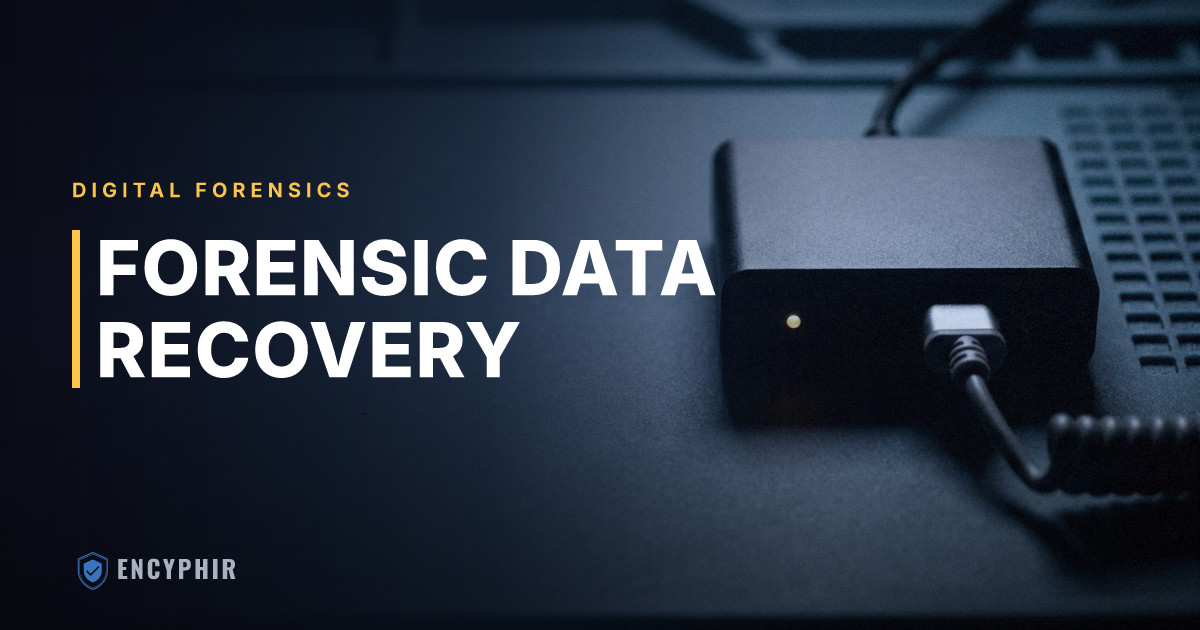
Data recovery and forensic data recovery are related but distinct disciplines. Standard data recovery aims to get lost files back into the hands of their owner. Forensic data recovery does that and more. It produces documented, authenticated evidence that can withstand legal scrutiny. The difference matters in any context involving litigation, investigations, or regulatory proceedings.
What Makes Data Recovery "Forensic"
The defining characteristics of forensic data recovery are documentation, chain of custody, and evidence integrity.
Documentation means that every step of the process is recorded: what device was examined, when, by whom, using what tools and versions, and what the results were. The documentation is thorough enough that another qualified examiner could repeat the analysis and get the same results.
Chain of custody means that the evidence can be accounted for from the moment it was collected through the present. Who had the evidence? Where was it stored? Who had access? A gap in chain of custody can lead to evidence being challenged or excluded in legal proceedings.
Evidence integrity means that the original evidence has not been modified. Forensic examiners use write-blocking hardware when connecting storage devices for imaging. This ensures that no data is written to the original evidence during the examination process. The forensic image is verified against the original using cryptographic hash values, proving that it is an exact copy.
How Forensic Recovery Differs in Practice
Standard data recovery typically involves:
- Connecting the device to recovery hardware or software
- Running recovery tools to identify recoverable files
- Delivering the recovered files to the client
Forensic recovery involves:
- Documenting the condition and identifying information of the evidence when received
- Creating a write-blocked, hash-verified forensic image of the storage media
- Performing all analysis on the image, not the original
- Documenting the tools, settings, and methodology used
- Producing a report that describes findings in terms suitable for use in legal proceedings
The result of standard recovery is files. The result of forensic recovery is files plus authenticated documentation of how they were obtained and what they represent.
What Can Be Recovered Forensically
Forensic data recovery techniques can surface:
- Deleted files and fragments of files that have not been overwritten
- File system metadata, including access, creation, and modification timestamps
- Application artifacts: browser history, email records, chat logs, and other data stored by applications
- Operating system artifacts: user activity logs, recently accessed files, connected device history, and system event logs
- Unallocated space analysis: data in storage areas not currently allocated to any file
The specific recoverable content depends on the device type, operating system, storage media, and time elapsed since deletion.
When Forensic Recovery Is Required
Forensic recovery is appropriate when evidence may be used in civil litigation, criminal proceedings, administrative hearings, or regulatory investigations. It is also appropriate in corporate investigations where findings may support disciplinary action, termination, or civil claims.
A practical rule: if the evidence might ever need to hold up in court or an HR proceeding, get it forensically. Recovering data through standard means and later trying to use it in a legal context creates evidentiary problems. Those problems can undermine otherwise strong cases.
The Risk of Non-Forensic Evidence Collection
Organizations that handle potential evidence through IT departments without forensic protocols risk rendering the evidence legally unusable. Standard IT troubleshooting often involves booting systems, running diagnostics, and making changes to address the presenting problem. These steps can modify or overwrite evidence.
When a matter has potential legal consequences, IT should be instructed to secure the device without making changes. Forensic examination should then be handled by a qualified forensic professional.
Common Scenarios Where Forensic Recovery Proves Decisive
The situations that drive forensic recovery engagements tend to share a common thread. Someone tried to delete, hide, or alter data, and the organization or attorney needs to establish what actually happened. Examples include:
- A departing executive who forwarded proprietary files to a personal email account before resignation
- A bookkeeper who deleted invoices after questions arose about vendor payments
- A supervisor accused of harassment who wiped text threads from a company-issued phone
- A student accused of plagiarism whose drafting history tells a different story than the final submission
In each of these matters, the recoverable artifacts often exceed what the subject expects. USB device connection histories can show that an external drive was attached the night before a resignation letter was delivered. Cloud sync logs can reveal that thousands of files were copied to a personal Dropbox or Google Drive account. Email clients retain cached copies of messages long after they have been deleted from the server. Even factory-reset phones can yield partial data through chip-off or advanced logical extraction techniques, depending on the model and encryption status.
When these findings intersect with allegations of financial misconduct, our certified fraud examiners work alongside forensic examiners to tie recovered records to specific transactions, reconstruct altered ledgers, and trace the movement of funds. The combination of digital evidence and financial analysis produces conclusions that are far more persuasive than either discipline alone.
Mobile Devices, Cloud Accounts, and Modern Complications
A decade ago, most forensic recovery engagements centered on laptop and desktop hard drives. Today, the evidence is scattered across:
- Mobile phones
- Cloud storage
- SaaS applications
- Messaging platforms
- Personal devices used for work under bring-your-own-device policies
Each environment introduces its own acquisition challenges.
Mobile phones are protected by full-disk encryption and passcodes. Depending on the model, operating system version, and security patch level, a forensic examiner may be able to perform a full file system extraction, a logical extraction, or in some cases only a limited advanced logical acquisition. The window of accessibility on modern devices is narrower than many clients assume. That is why time matters: a phone that can be examined today may become inaccessible after the next software update.
Cloud data presents a different problem. The data is not physically present on any device the client controls. Acquisition often requires credentials, legal process, or cooperation from the account holder. When an employee is suspected of misconduct, preserving access to their company-associated cloud accounts before notifying them of an investigation is often the difference between a thorough examination and a dead end. Our security consulting engagements often include protocol development for exactly these situations. Organizations then know what to preserve, in what order, and who to call before the first interview takes place.
How Forensic Findings Are Used in Litigation
A forensic report that sits in a file cabinet is of limited value. The work product has to be usable by the attorneys and triers of fact who will decide the matter. A well-prepared report identifies the evidence examined, summarizes the methodology in language a non-technical reader can follow, states the findings in clear terms, and includes appendices with the technical detail an opposing expert needs to evaluate the work.
Forensic examiners also testify. Deposition and trial testimony require the examiner to explain complex technical concepts in accessible language, to defend their methodology against cross-examination, and to distinguish between what the evidence shows and what it does not. An examiner who overstates conclusions creates vulnerabilities. One who understates them leaves value on the table. We routinely support law firms throughout the litigation lifecycle, from early case assessment through expert disclosure and trial testimony. We structure our reports with the evidentiary standards of the forum in mind.
Preservation: The Step That Cannot Be Skipped
The most consequential decision in any matter involving digital evidence is how the evidence is preserved before a forensic examiner ever touches it. Once data is overwritten, no amount of expertise can recover it. Preservation starts the moment an organization has reason to anticipate litigation, an investigation, or an internal inquiry.
Practical preservation steps include:
- Removing the relevant device from service
- Powering it down if appropriate for the media type
- Storing it in a secure location with access logged
- Documenting the identity of every person who has handled the device
- Placing email accounts on litigation hold within the administrative console of the email provider
- Disabling sharing and deletion on cloud accounts associated with the matter where possible
- Configuring backup systems to prevent the rotation of backups that might contain relevant data
These protocols become especially important in matters involving executive misconduct investigations. The subject often has broad access to systems, and advance notice of any investigative activity can result in the destruction of key evidence. Quiet, coordinated preservation is frequently the first phase of work. It is undertaken before interviews begin and sometimes before the subject is aware that a concern has been raised.
Working With a Forensic Examiner
Engaging a forensic examiner early yields better outcomes than waiting until a case is already in motion. Early engagement allows the examiner to advise on preservation, identify devices and accounts that may be relevant, and plan the acquisition sequence. It also allows counsel to frame work product under the attorney work product doctrine where appropriate, protecting preliminary findings from discovery.
Our digital forensics team performs forensic data recovery for legal teams, corporate clients, and individuals. We provide full chain-of-custody documentation and findings reports suitable for use in civil and criminal proceedings. We partner with law firms on discovery-grade engagements and with our certified fraud examiners when recovered records are central to an embezzlement or financial misconduct matter. Contact us to discuss your matter.