How to Preserve Social Media Evidence for Court Before It Disappears
 November 10, 2026
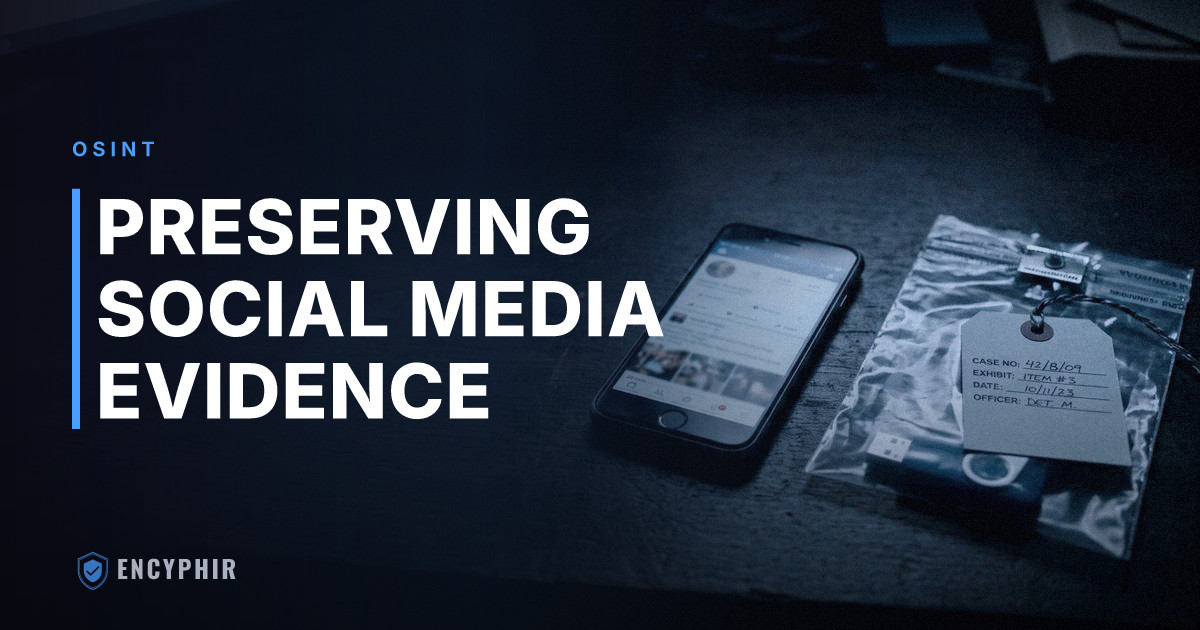
Social media evidence has a short shelf life. The moment a claimant gets a letter from an insurer, a spouse is served, or an employee learns of an investigation, the posts that matter start disappearing. What was captured before that moment can be used. What was not is usually gone. This is a practical guide to preserving social media evidence so it is still there, and still admissible, when the case needs it.
Capture First, Then Think
The single most important rule is speed. Deleted posts cannot be reliably recovered. Platforms hold deleted content for limited and inconsistent periods, release it only in response to legal process, and routinely produce account records that omit the content itself. Archive and cache services capture only a sliver of the web. If a post matters, the time to preserve it is before anyone involved knows it matters.
That means a preservation letter, while worth sending to the opposing party to set up a spoliation argument, is not a preservation strategy. It is notice. The evidence has to be collected.
What a Proper Capture Includes
A screenshot is a picture of a post. A forensic capture is the post, preserved with everything a court will ask about. The elements are consistent across platforms.
The full page, not a crop, so the context of a post is preserved and the other side cannot argue the meaning was changed by what was left out. The URL of the post and of the profile, because the address is the first thing a court uses to tie content to an account. The account identifiers visible on the page: handle, display name, profile photograph, and any linked accounts. The date and time the content was posted, and separately the date and time it was captured. A cryptographic hash of the captured file, computed at the moment of capture, so that any later alteration can be detected. And a collection log recording who performed the capture, from what account, using what tool, in what sequence, and what was observed.
Video and ephemeral content need their own handling. Stories, reels, and live streams should be recorded in full with the same metadata, and the recording hashed and logged the same way.
Keep the Collection Lawful
Preservation is only useful if the evidence is admissible, and evidence obtained by deception is not. Do not create a fake account to friend the subject. Do not ask a mutual friend to screenshot a private account. Do not log into a spouse's or employee's account, even if you know the password. Do not send a connection request from your own account to gain access to restricted content. Each of these has resulted in evidence being excluded and, in some cases, in sanctions or criminal exposure for the person who did it.
Public content, and content visible to an audience that lawfully includes you or the investigator, is fair game. In practice that is usually more than enough. People post publicly, their friends and family post publicly about them, and tagged photographs and cross-platform activity fill the gaps.
Preserve the Chain of Custody
Once captured, the evidence has to be stored so its integrity can be demonstrated. That means keeping the original captures unaltered, with their hashes, in a location where access is controlled and logged. Working copies can be made for review, but the originals are what get produced. When the evidence changes hands, from investigator to counsel to the court, the transfer is recorded. This is the same chain-of-custody discipline that applies to physical evidence and to digital forensics, and it is what allows a witness to say under oath that the file in front of the court is the file that was captured.
Why Who Captures It Matters
A party can capture their own evidence, and in small matters that is often fine. In anything contested, the capture should be done by someone who can be called to explain it. Evidence does not authenticate itself; a witness does. A licensed investigator who followed a documented method, kept a log, and can describe the tools and the sequence is a far more credible witness than a party describing how they took a screenshot on their phone.
Encyphir's social media investigations are run to this standard: public-source collection only, hash-verified captures, a chain-of-custody log, and investigators who testify in California, Florida, and federal courts. For how this plays out in insurance claims specifically, see Social Media Investigations for Insurance Claims. For what makes a screenshot admissible in the first place, see Is a Screenshot Admissible Evidence in California?
Frequently asked questions
Can deleted social media posts be recovered for a court case?
Sometimes, but not reliably. Platforms retain deleted content for varying periods and release it only under a subpoena or court order, and search engine caches and archive sites capture only a fraction of pages. The dependable way to have a post available later is to capture it before it is deleted.
Can I send a litigation hold or preservation letter to Facebook or Instagram?
A preservation request can be sent to a platform, and in litigation counsel can subpoena account records, but the platforms' responses are slow, limited, and often exclude content. A preservation letter to the opposing party puts them on notice not to delete their own posts, which matters for spoliation, but it does not produce the evidence. Capture what is public yourself, or have an investigator do it.
Is it legal for a private investigator to collect someone's social media posts?
Yes, when the posts are public or visible to an audience that lawfully includes the investigator. It is not legal, and it is not admissible, to create a fake profile to friend the subject, log into their account, or use pretext to obtain private content.