The Role of Body Language in Investigative Interviews
 May 11, 2026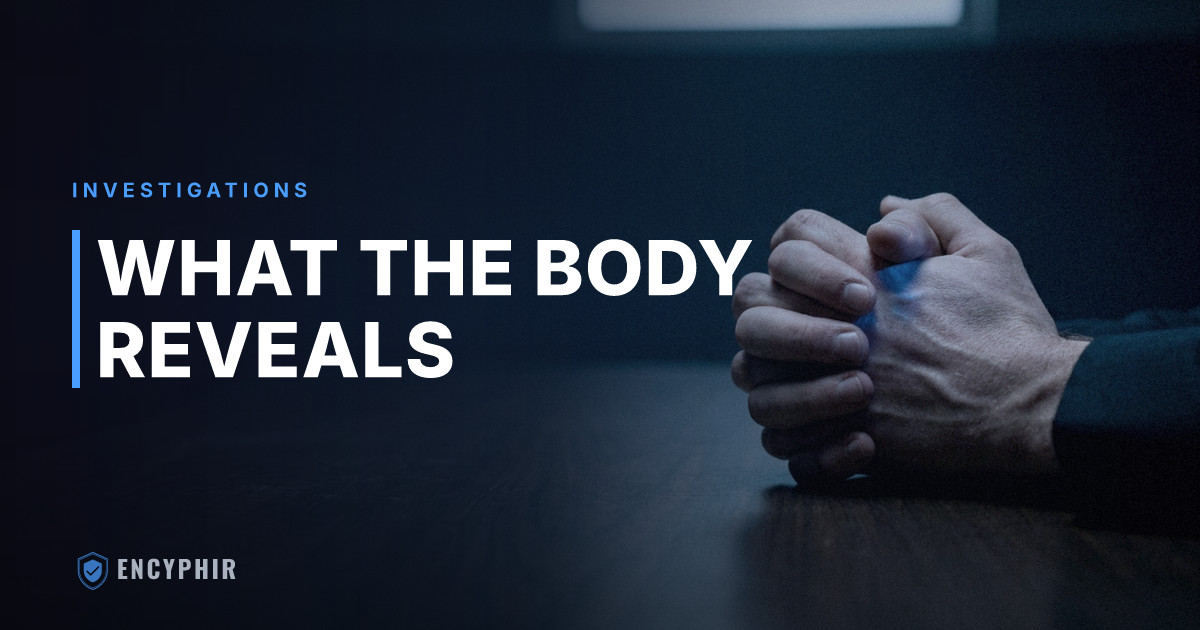
In any investigative interview, the words spoken are only part of the story. Skilled investigators know that the human body often communicates what the mouth will not. A subtle shift in posture, a flicker of micro-expression, or an unconscious gesture can reveal volumes about a subject's truthfulness, stress level, or willingness to cooperate. For businesses dealing with fraud, employee misconduct, or sensitive internal matters, understanding the role of body language in interviews can mean the difference between uncovering the truth and reaching a dead end.
At Encyphir Risk Management, our investigators are trained to observe, interpret, and document nonverbal cues alongside verbal responses. This dual-layered approach produces stronger evidence, more reliable conclusions, and outcomes that withstand legal and corporate scrutiny.
Why Nonverbal Communication Matters
Research in behavioral science consistently shows that a significant portion of human communication is nonverbal. While exact percentages vary, the principle remains: people often signal discomfort, deception, or concealment through their bodies before their words catch up. In an investigative setting, where subjects may have strong incentives to mislead, those signals become invaluable.
Nonverbal cues are particularly important because they are harder to control than speech. A subject can rehearse a story, but they cannot easily rehearse the involuntary movements of their eyes, hands, and face. A trained interviewer learns to read these cues in context, comparing baseline behavior to behavior during sensitive questions, and noting when the two diverge.
Key Body Language Indicators Investigators Watch For
Professional investigators look at a wide range of nonverbal behaviors during an interview. Some of the most telling include:
- Micro-expressions: Fleeting facial expressions that last only a fraction of a second can reveal hidden emotions such as fear, contempt, or surprise.
- Posture shifts: Sudden changes in how a subject sits or stands often correlate with discomfort or attempts to create psychological distance.
- Hand and arm movements: Self-soothing gestures, such as rubbing the neck or covering the mouth, can indicate stress when a particular topic arises.
- Eye behavior: While the myth of "looking up and to the left means lying" has been debunked, sustained changes in gaze patterns, blink rate, or pupil dilation can be meaningful.
- Vocal cues: Although technically paraverbal, changes in pitch, pace, and pauses work hand in hand with body language to paint a fuller picture.
No single cue proves deception on its own. The skill lies in identifying clusters of behavior, comparing them to a subject's normal patterns, and correlating them with the content of the conversation.
Establishing a Behavioral Baseline
One of the most important steps in any investigative interview is establishing a baseline. Before any sensitive questioning begins, our investigators engage subjects in neutral conversation to observe their natural mannerisms, speech rhythms, and physical habits. This baseline becomes the reference point for the rest of the interview.
When the topic shifts to areas of interest, such as questions about executive misconduct or internal fraud, deviations from the baseline become far easier to detect. A subject who suddenly grows still after being animated, or who begins fidgeting after sitting calmly, is signaling something worth exploring further. Without a baseline, investigators risk misinterpreting normal habits as signs of deception.
Combining Body Language With Other Investigative Tools
Body language analysis is powerful, but it is never used in isolation. The most effective investigations weave together multiple streams of evidence. Behavioral observations from an interview may corroborate findings from digital forensics, background research, or surveillance operations. When physical, digital, and behavioral evidence align, the resulting case is far stronger and more defensible.
For example, a subject's discomfort when discussing a particular vendor relationship may take on new significance when paired with email metadata or financial records showing irregular transactions. Likewise, observations made during a pre-employment interview can guide deeper verification of a candidate's claims. Body language opens doors; the supporting evidence walks through them.
The Limits and Ethics of Reading Body Language
A responsible investigator also understands the limits of body language analysis. Nervousness is not the same as deception. Cultural differences, neurodivergence, medical conditions, and personal trauma can all affect how a person presents themselves in an interview. Drawing conclusions from a single twitch or glance is not just unprofessional, it can be harmful.
That is why Encyphir's investigators are trained to use body language as a guide rather than a verdict. We use it to direct our questioning, identify topics that warrant deeper inquiry, and assess overall credibility. Final conclusions are always grounded in corroborating evidence and documented thoroughly for our clients.
Partner With Investigators Who See Beyond Words
Whether you are addressing internal misconduct, vetting a key hire, or preparing for litigation, the quality of your interviews can make or break the outcome. Encyphir Risk Management combines decades of investigative experience with advanced interview techniques to deliver clarity when it matters most.
If your organization needs answers, contact Encyphir today to learn how our team can support your next investigation with precision, discretion, and insight that goes far beyond the spoken word.